
They teach French to immigrants differently
Jean Numa Goudou ·
They won the 1st prize for innovation from Fonds 1804 with "Des mots pour comprendre, des projets pour agir" which aims to encourage students to read and engage with books in general.
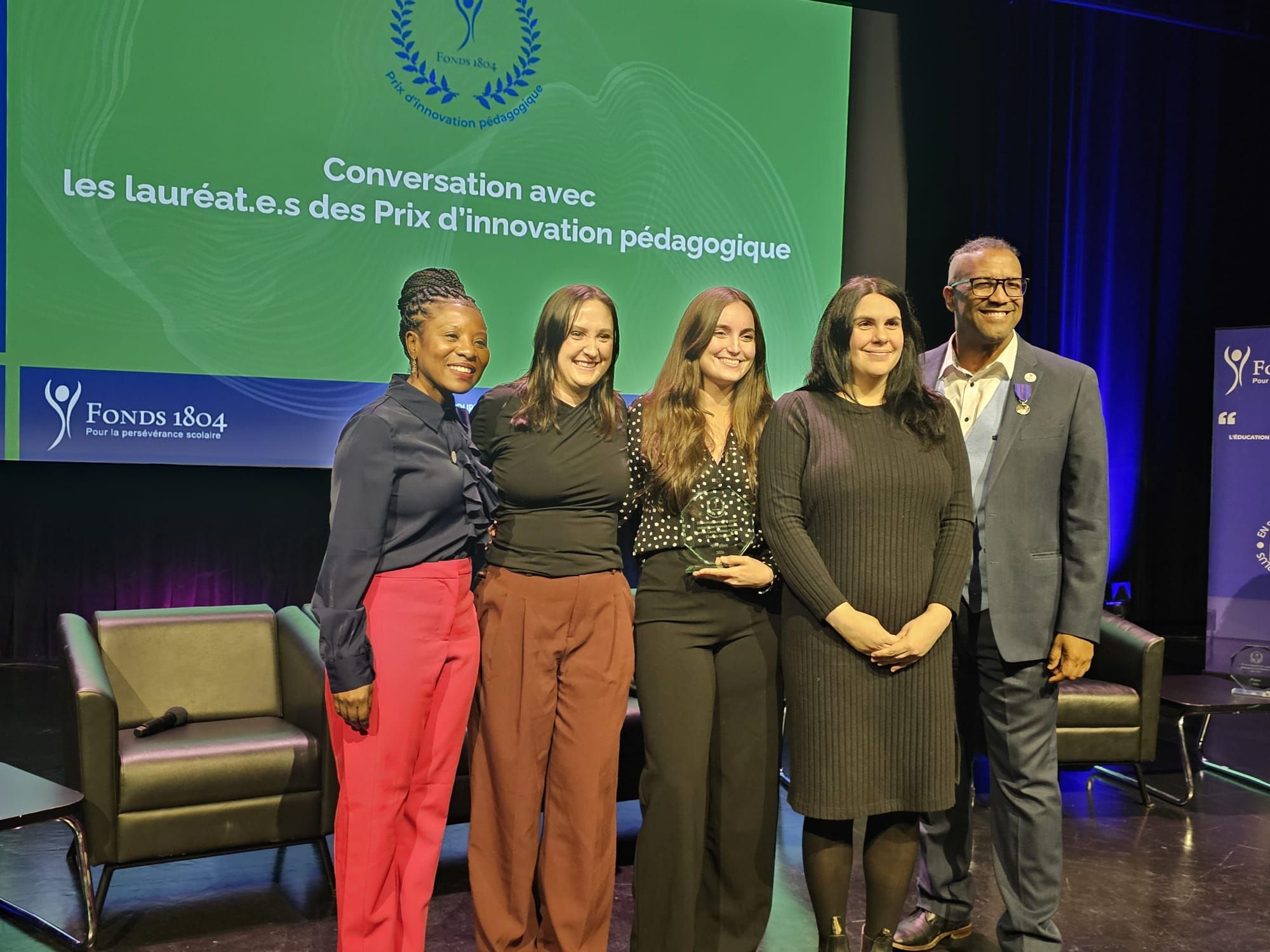
Laurence Caron, Charlotte Steingue and Véronic Clermont have been teaching Grade 11 French for 6 to 12 years at Henri-Bourassa School in Montréal-Nord. Their classes are 90% filled with second-generation young immigrants, but also with youth who recently arrived in the country with a "very low level of engagement and priorities on other subjects."
Students were neglecting spoken language and there was also a general knowledge issue among them. A year ago, 50% of them were failing their provincial French exams.
The teachers found this "hard" and took the initiative to launch: "words to understand, projects to act" which aims to encourage students to read and learn French in general. The project takes place in workshop format every lunchtime at school. It has become a space where young people come to express themselves about their creations and discoveries of books, among other things.
"By giving them this space to speak, I learned things about myself," indicates Véronic Clermont in an interview with Intexto. A student with learning difficulties was able to turn things around thanks to a slam poem about racial profiling. "They are all capable of great things in life," adds Charlotte Steingue for her part.
An achievement in one year
Thanks to this project with a new approach, young people from immigrant backgrounds were able to go from a 50% failure rate to an 80% success rate on Ministry of Education exams. The workshops led by these teachers aim not only to improve syntax, but also and especially "the development of critical thinking."
"It takes time before they get on board, but when they do, our workshops are full and students jostle to find a chair," rejoices teacher Clermont. Workshop activities sometimes provoke heated discussions, even anger, which the teachers consider "such a fantastic learning motivator."
"I want my students to question, to challenge what I say. I want to debate and I'm not afraid to be wrong, because they have things to teach me," indicates Véronic Clermont.
The teenagers' liveliness of mind fascinates her and the teacher sees an incredible opportunity in what they express, even with anger. "They are able to tell me: I like it or I don't like it. And I love that clarity, because it's so pure," believes this book lover who had studied literature before making the leap into teaching.
Teacher perseverance
As part of the Fonds 1804 Educational Innovation Prize (PIEF), created by Fonds1804, their project won first prize and they took part in the organization's 11th great conversation on February 22, at the Grande bibliothèque de Montréal.
The PIEF was born from a desire by Fonds 1804 to recognize teaching staff engaged in the educational success of young people. For more than 10 years, Fonds 1804 has been working with youth and parents to promote academic perseverance.
"The missing link was teachers. They must not only show perseverance on a daily basis, but encourage their students to do the same through their creativity and commitment," indicates the Fonds in a press release related to the prize.
The PIEF highlights innovative initiatives that enrich the learning experience and support the success of elementary and secondary students in Quebec's public schools.
In total, 16 projects were submitted by elementary and secondary teachers for the first edition of the PIEF.
These are meaningful projects that have a positive impact on young people's success. Eight of them were selected as finalists in the competition that aimed to determine three winners. A special recognition award was also given by jury members.