
Police career in Quebec: a closed door for Black people
Alain Babineau ·
Quebec is also the only province to impose an eliminatory swimming test for successful completion of the Police Technology program at cégep.
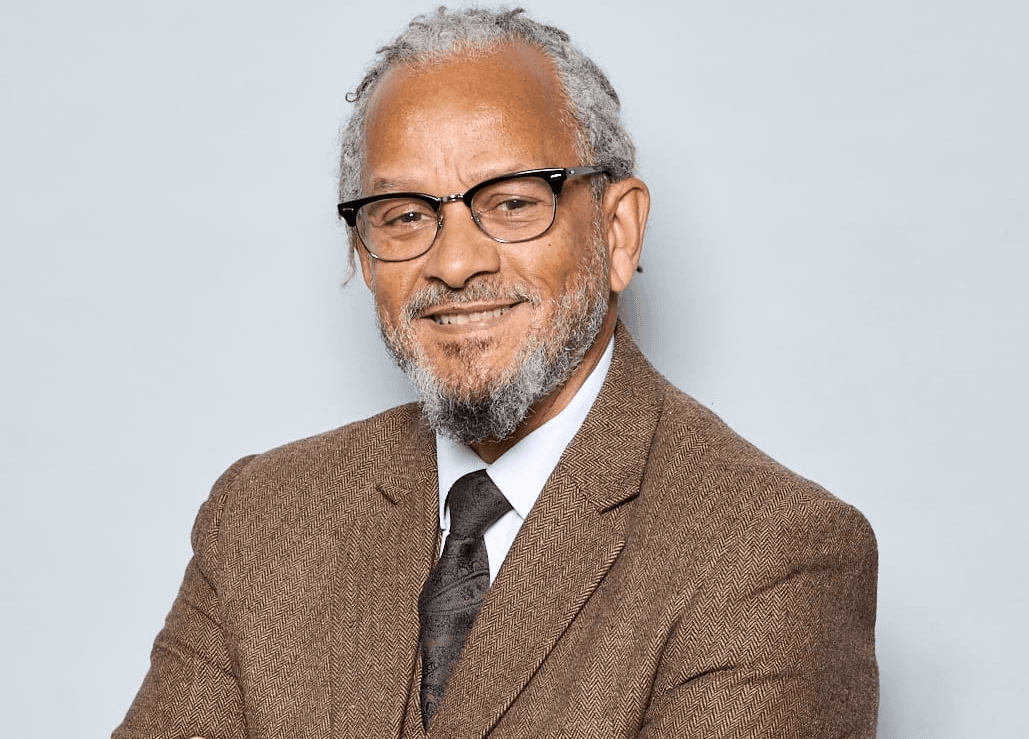
Several decades ago, I made a decision I never wanted to make. A Black man born and rooted here, educated here, bilingual — I had to turn my back on Québec's police forces to join the RCMP, the only institution willing to let me in.
Not because I lacked competence. Not because I lacked motivation. But because the laws and policies of this province have built, brick by brick, a wall that few racialized people can cross.
This wall carries no sign reading "Blacks keep out." It is called the Loi sur la police, it is called the swimming test, it is called the admission threshold. It is legal, institutional, respectable in appearance. And it is devastating in its effects. It did not appear overnight.
A history that began before us
My friend Édouard Anglade was born in Haiti in 1944. He arrived in Montreal in 1964, at age twenty, fleeing the Duvalierist dictatorship. After learning the language, putting down roots, and obtaining his Canadian citizenship, he applied to become a police officer — and had to wait ten years before being sworn in at the SPVM in January 1974, while his white colleagues born here were entering the profession between the ages of eighteen and twenty-one. Fifty-two years after his admission, that barrier has not disappeared. It has simply been formalized into law.
Article 115 of Québec's Loi sur la police requires that every officer be a Canadian citizen — a condition no other Canadian province imposes, and one that runs counter to Section 15 of the Canadian Charter of Rights and Freedoms, as well as Sections 10 and 16 of Québec's Charter of Human Rights and Freedoms, which prohibit discrimination in access to a profession.
What society denied Édouard Anglade through prejudice, the law now denies by decree.
The swimming test: a barrier without justification
Québec is also the only province to impose an eliminatory swimming test for admission to the police technology program at CEGEP. Failing this test means seeing one's policing career end before taking a single course — with no appeal, no accommodation.
The ENPQ had itself removed this test from its admission criteria in 2015, acknowledging it could not justify its relevance. It was transferred to the CEGEPs, where it continues to disproportionately eliminate candidates from racialized communities, particularly those originating from the Global South.
In 2021, I assisted the organization Lakay de Repentigny in filing a formal complaint with the Commission des droits de la personne et de la jeunesse (CDPDJ), on behalf of a young Québécois of Haitian origin excluded by this test. After nearly two years, the CDPDJ dismissed the complaint. A documented barrier, a demonstrated discriminatory effect, a remedy leading to a dead end.
This obstacle also violates the articles mentioned above. It is a violation waiting to be successfully challenged in court.
Diversity as a façade
Since 1989, Québec has had the AEC Diversité policière, anchored in Article 86.1 of the Québec Charter, with an explicit mandate: to recruit racialized and Indigenous candidates in proportion to their demographic weight. Thirty-five years later, the results are damning. ENPQ data indicates that 83% of participants in these specialized cohorts are white and of Euro-descendant origin. In February 2024, Radio-Canada revealed that the first AEC cohort at Cégep Garneau, reserved for visible minorities, did not include a single student from those groups.
The regular stream is even more telling: visible minorities represent 5 to 6% of graduates, Indigenous candidates barely 0.2%. These figures are almost entirely concentrated in three Montreal CEGEPs. Outside of Montreal, cohorts are nearly entirely white. Remove the AEC, and the pipeline will exceed 90% white candidates. The AEC is not a success — it is a demographic life-support system keeping alive numbers that the ordinary system is structurally incapable of producing.
Meanwhile, the SPVM's conventional university pathway, open to all without restriction, processes between 300 and 450 applications per year, with no prior job guarantee — ten to fifteen times the AEC's capacity, with none of the conditions imposed on racialized candidates. And those who manage, despite everything, to clear these hurdles face a hostile culture: accused of being "job thieves," of benefiting from lowered standards. The message is constant — their presence is illegitimate.
The RCMP as the only open door
In the early 2000s, for four years, I was an RCMP recruiting officer for the province of Québec. I recruited many racialized candidates who went on to become supervisors and senior officers. I asked them all the same question: why the RCMP rather than the SQ or the SPVM? The answers were consistent. Some had applied to provincial forces and been rejected.
Others already knew that these institutions did not want them. They had chosen the RCMP because it was the only door that opened — no citizenship requirement, no swimming test, no academic threshold calibrated to an unequal system.
Twenty years later, I still have these same conversations with new officers. Same questions, same answers, different faces — same story. Racialized candidates who want to build a career in policing in Québec still tend to turn to the RCMP or to Ontario, because Québec's systems have told them, in law and in practice, that they are not welcome. This is not a recruitment challenge. It is the result of policy being applied.
Today, the RCMP's Québec division is the most representative police force in the province. The proof is clear: remove the provincial barriers, and diversity follows. The talent pool has always existed. Québec's barriers did not reflect its absence. They produced it.
A political choice, not an inevitability
These barriers are not inevitabilities. They are political choices. Ontario has no citizenship requirement, no eliminatory swimming test, and a Human Rights Tribunal that issues binding orders. Its major police forces are approaching 20% visible minority representation. Québec remains below 9% in major cities, and nearly at zero outside of Montreal.
Behind every barrier crossed lies a concrete human cost. A first-class officer at the SPVM earns more than $112,000 in base salary, with a defined-benefit pension. A security guard — a sector in which Haitians and other Black people are massively overrepresented — earns between $41,000 and $46,000, with no pension, no stability. The system is not only closing a professional door. It is closing a door to the middle class.
Édouard spent thirty years fighting to crack open a door that remains, in most parts of Québec, barely ajar. He left us too soon — and the barriers he would have gladly dismantled still exist.
The question is not whether discrimination exists. It is documented by the institutions' own data and lived by thousands of people in our communities. The question is whether Québec has the political will to change what it has itself built.
We are here. We are waiting.