
Montreal-Nord: the "N" word would merely be "incivility"
Jean Numa Goudou ·
"In fact, when it is classified in the 'incivility' category — if that is the choice that is made — it does not mean that there are no consequences. And on that point, I really urge people to be careful about what is said," the mayor clarifies.
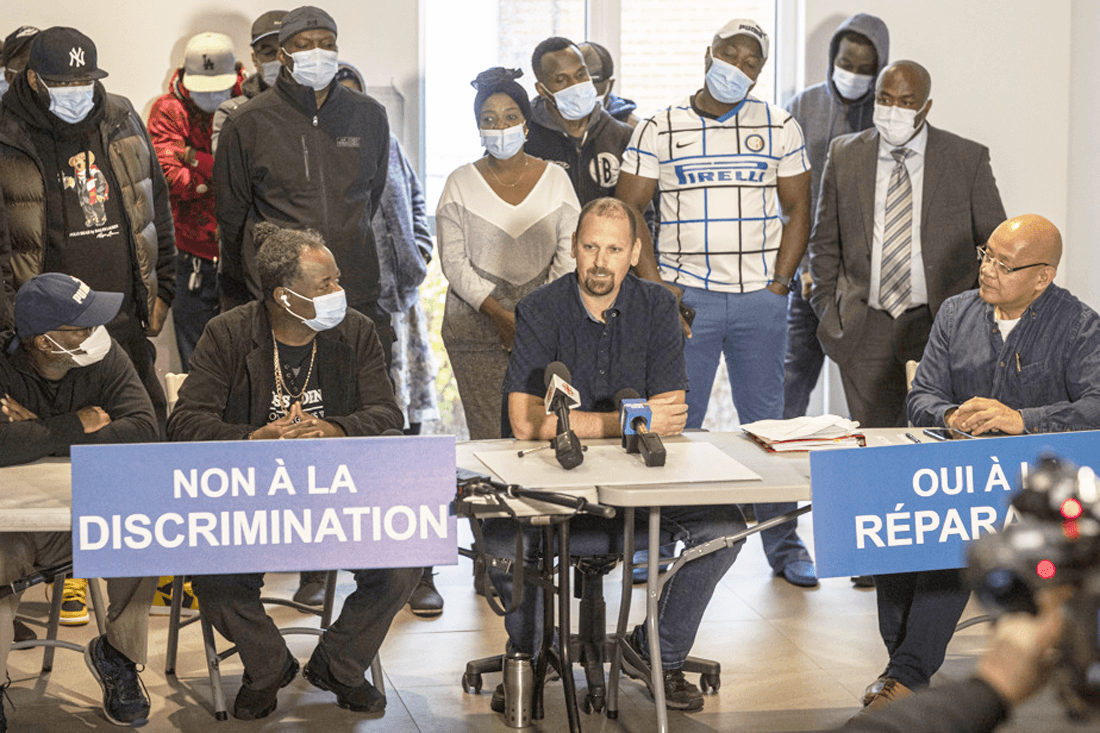
While it was believed that the discrimination situation had been resolved since the Settlement reached (2023) between the City and the Black blue-collar workers based on Professor Angelo Soares's report (2021), union activist Gino Clyford Lubérisse states that cases still exist today and are the subject of about ten complaints. "That's what I can confirm to you. There are still cases occurring this year, in 2026, related to what we went through," the union activist told In Texto in an interview.
Montréal-Nord Mayor Christine Black does not dispute this account. Also speaking with the paper, she acknowledges that there is still work to be done.
"Listen, it would be utopian to say that everything is resolved. We are in a society that is learning, that is growing, and at the borough, we are no different. We have employees who reflect what we have as a society: people from everywhere, of all ages, men, women, from all communities. So we end up with a profile that resembles our society," summarizes Ms. Black.
"So to say… that it's behind us, I would never go that far — at least not today, I don't have that certainty. However, what is important at this stage is knowing whether the mechanisms are in place," she adds.
During this conversation, Christine Black placed significant emphasis on a series of measures and mechanisms put in place to address these situations. Internally, various committees have been established. The idea being that everyone — managers and employees alike — can sit at the same table and discuss new ways of doing things.
"On our side, we had a new administration, and a new political team as well in Montréal-Nord, that wanted to sit down together more effectively to create spaces for exchange, dialogue, and consultation, and to agree on a new way of doing things," notes the politician.
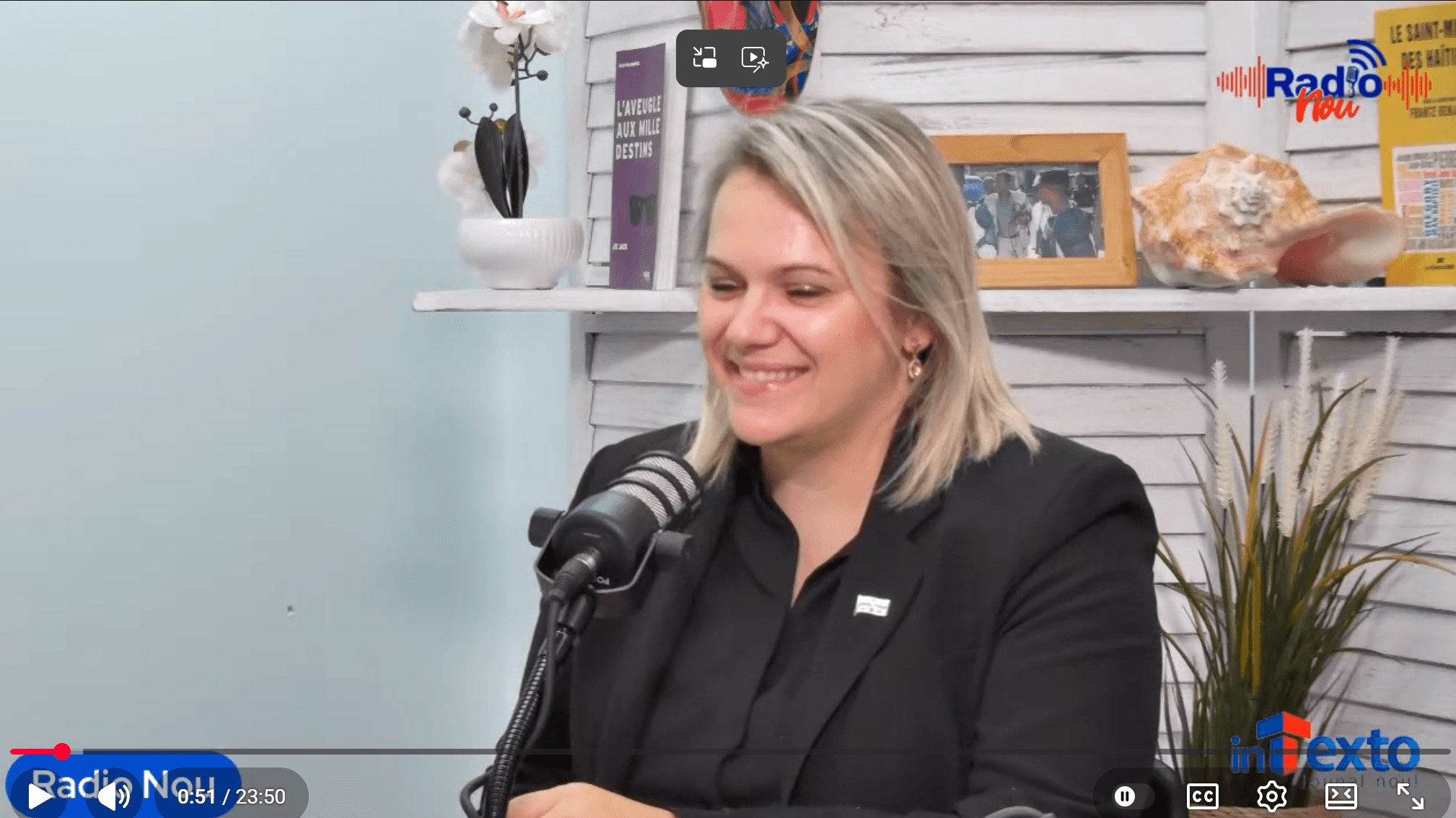 Montréal-Nord Mayor Christine Black in the Radio Nou studios
Among other mechanisms:
• the CIRI, the internal intercultural relations committee, which has held more than 25 meetings in recent years;
• the anti-racism committee, which has held three meetings this year;
• the EDI (equity, diversity, inclusion) plan, which has resulted in 13 meetings;
• and of course everything related to labour relations.
"In theory, they have changed the policies on respect for persons. They have set up the complaint support centre, which receives complaints, filters them, and forwards them to the Commission de la fonction publique. There is even a phone number at the central city. The central city and the controller general have established equity, diversity, and inclusion committees. Many things have been done. They provide training on civility," admits union activist Lubérisse.
"But we are operating in theory," he concludes bluntly.
Because Gino Clyford Lubérisse keeps in mind that the investigation into discrimination against Blue-collar union members in the Montréal-Nord borough, conducted by full professor Angelo Soares, addressed "systemic discrimination." Yet, victims cannot file a complaint to that effect.
"It's not that they don't accept them: there is no place to file the complaint. There is no checkbox. On the form, you have to check a box: harassment, incivility, microaggression… but systemic racism — that doesn't exist. No complaint is taken for systemic racism. They tell you: 'You can file a complaint against the individual.' But my problem is not the individual. My problem is the power that allows the individual to discriminate against me. How do I file a complaint about that? Nobody knows."
The N-word, just incivility?
Beyond the difficulty for Black employees to file complaints for systemic racism, the grievance analysis framework for racism in general poses a problem. The use of the N-word, despite its historical weight, is currently considered by the employer to constitute incivility.
"When someone calls me [the N-word], it is not merely a matter of sensitivity: there is a historical burden that comes with it. With that word, the employer talks about incivility; in their analysis framework, it is incivility," laments the union activist.
"The racial dimension, the baggage that comes with it, is diminished, reduced, rendered meaningless. It is compared to insults like 'fat ham.' I have a member who was a victim of that," points out Gino Clyford Lubérisse.
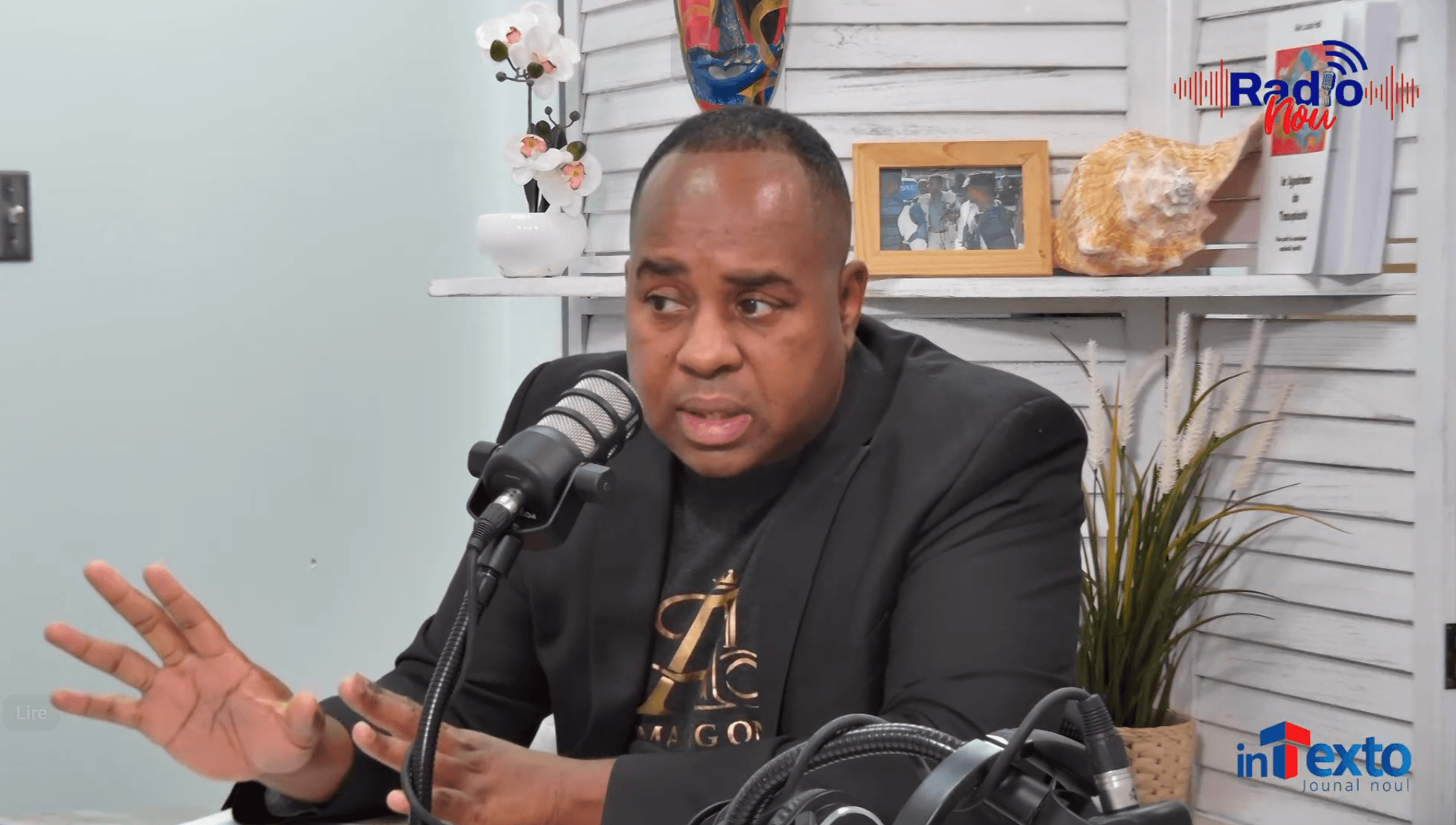 Union activist Gino Clyford Lubérisse
The Mayor of Montréal-Nord says she is well aware of the situation and has already met with several employees who have been subjected to this type of treatment. Christine Black condemns it.
"In fact, these are remarks that should not be made in a workplace. On that, we agree," she says when asked whether she considers it to be merely incivility.
"It is important to continue the work — that is the message I wanted to send today by returning to your program. This is work that will be carried out on an ongoing basis. It is normal to question, to want to improve the system and ensure that things keep getting better," she adds.
Ms. Black adds that some employees have nonetheless been penalized for the use of that word in the workplace. "In fact, when it is classified under the category of 'incivility' — if that is the choice that is made — it does not mean there are no consequences. And on that point, I really urge people to be careful about what is said," the mayor clarifies.
The mayor states that several employees have received "a one-day suspension, several days' suspension, a note on their file…" for the use of such a word or a "bad joke," without specifying the number.
"What I hear in the public sphere is that there are never any sanctions. But I urge caution…," says the mayor. Christine Black, by virtue of what the law grants her, has access to all documents relating to situations of this kind. But she cannot disclose them.
"So an employee who receives a sanction — small, medium, or large — for unacceptable behaviour is not required to say so. And we cannot say so either. When an employee receives, for example, a one-day suspension for a bad joke — as a general example — if they don't say so, I have no way of making that public, and neither does the administration," the borough's top official argues in her defence.
Two questions
-Is it possible to make changes to your analysis framework? That is what the employees and the union activist are criticizing.
"On that front, I know that the request has already been submitted. It is important to submit it and to bring the system — the borough, the central city, etc. — to ensure that it meets the right criteria and that everyone can find their place within it. That is among the elements we will be looking at in the coming weeks." — Christine Black.
"I am awaiting feedback from the administration on possible adjustments. We are also considering whether a five-year review could be conducted, to allow us to see where we stand today: a snapshot of 'In 2019-2021, we were at this point; in 2026, where are we?' All of this work is currently being analyzed, so that we, in our role as elected officials at the borough, have that picture and that external analysis." — Christine Black.
What Gino [Clyford Lubérisse] said is that the major problem today is the difficulty for victims to file a complaint for systemic racism. This is important to them: everything they experienced, which led to these investigations and these agreements, was based on systemic racism and discrimination. They want to be able to file a complaint about that, and there is no mechanism, no place where they can do so.
-What do you say to that?
Christine Black: "As I say, the conversations must continue — I will continue them with Gino as well — and we must use the existing bodies, which are there precisely to receive complaints, improve the system, and ensure that we move forward. But to say that there is a systemic problem right now, as was the case in 2019-2021, I would be very surprised if that were the conclusion we arrived at. So much work has been done, on all sides, by everyone; everyone has put in enormous energy. And what is important through all of this is to feel the mobilization of all employees. I can understand that when one has experienced difficult situations — and we know it, it has been confirmed, it was extremely difficult — one becomes hypersensitive to everything happening around us. I understand that. That is why, for me, the conversation and the exchanges must continue. I am committed to working with Gino, with the union, with all employees. The communication channel is there; it must continue to be, and we must keep bringing these elements to the appropriate bodies. But at the same time, we must ensure that everyone's rules are respected, within the rule of law in which we operate. The balance is not simple to find, but that is what we truly want to continue working toward. That is clear, clear, clear."