
A Montreal street named in honor of a slave owner
Frédéric Boisrond ·
The "Code noir," a royal ordinance from 1685 governing slavery in French colonies, was formally and unanimously repealed by the French National Assembly on May 28, 2026.
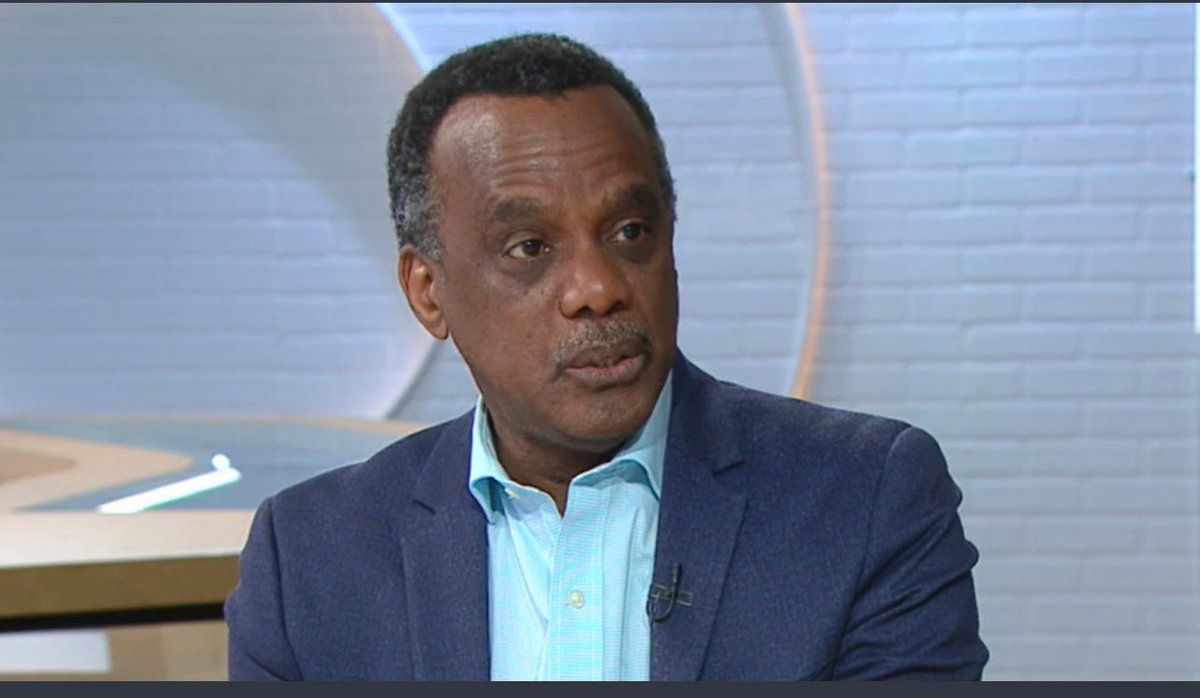
It's not one, but four Montreal boroughs that proudly bear the street name "Colbert" after Jean-Baptiste, "the father of the Code noir," recalls sociologist Frédéric Boisrond in an open letter to the mayor of Montreal. In this correspondence, he calls for the revision of this toponymy.
"Jean-Baptiste Colbert is the father of the Code noir, a set of legal texts that legalized and organized the enslavement of Black women, men and children in French colonies," reminds Mr. Boisrond. However, France itself has just gotten rid of these texts, a few days ago.
The "Code noir," a royal ordinance from 1685 governing slavery in French colonies, was formally and unanimously repealed by the French National Assembly on May 28, 2026. Although slavery was abolished in 1848, some colonial texts still remained in the French legal arsenal.
Here is the full letter from Frédéric Boisrond
_Laval, June 9, 2026 Mrs. Soraya Martinez Ferrada Mayor of Montreal
Subject: Request for revision of the naming of Colbert Street in several Montreal boroughs (open letter).
Madam Mayor, Through this letter, I wish to submit a request for the revision of the naming of streets bearing the name "Colbert," particularly in the boroughs of Ahuntsic-Cartierville, Saint-Léonard, Pierrefonds-Roxboro and Rivière-des-Prairies–Pointe-aux-Trembles. These streets pay tribute to the ideologist of the French slavery system.
According to information available on the Quebec Toponymy Commission website, these streets were named in honor of Jean-Baptiste Colbert. This figure is the father of the Code noir, a set of legal texts that framed and institutionalized slavery in French colonies.
We owe to Jean-Baptiste Colbert the legalization of the dehumanization and enslavement of hundreds of thousands of Black men, women and children, to whom he imposed and attached the status of objects.
Jean-Baptiste Colbert made slaves "movable property" that could be bought, sold, exchanged or destroyed like any other item. The Code noir gave masters the right to mutilate their slaves, brand them with hot iron and punish with death those who attempted to flee. Obviously, since furniture cannot testify in court, Black girls and women could not file complaints for rape. A Black man could not sue his torturer, a torturer who, legally, was not one.
A toponymic designation is never neutral. It reflects memory choices and collective values. Knowing, Madam Mayor, that the Code noir is the legal framework conceived and promoted by Jean-Baptiste Colbert to legitimize the extreme violence of the slavery regime and the impunity of masters, honoring such an individual in our public space constitutes, in my eyes, an indecency and an insult to all Montrealers.
My reflection also fits within a broader international and political context. On March 25, 2026, the United Nations General Assembly adopted a resolution qualifying the transatlantic slave trade and slavery as the "gravest crime against humanity."
In this context, the presence of a designation honoring Jean-Baptiste Colbert in Montreal, as anywhere else in Quebec, seems to me totally inappropriate and contrary to the values of human dignity as well as to the values of your city. The French National Assembly, for its part, officially repealed the Code noir on May 28, 2026.
It is possible, as in this country where this text had fallen into the oblivion of archives, that the naming of Colbert Street in Montreal has fallen into the archives of oblivion. I ask you, Madam Mayor, to correct this anomaly by initiating the necessary steps for the redesignation of these circulation routes.
Imagine, Madam Mayor, the symbolic and pedagogical impact that replacing Jean-Baptiste Colbert's name with that of a woman or man who fought for the freedom and emancipation of Black people would have, so that they are recognized as full human beings, citizens with equal rights. I remain available to provide any additional information deemed useful or to participate in any consultation or reflection that the City would like to conduct regarding this issue.
Please accept, Madam Mayor, the expression of my distinguished greetings.
Frédéric Boisrond
Sociologist
514-995-3854
fboisrond@gmail.com _