
The PQ, independence and Haitians
Jean Numa Goudou ·
How to convince the Haitian community that independence would be the best option? "It will come," says Lucner Benoit.
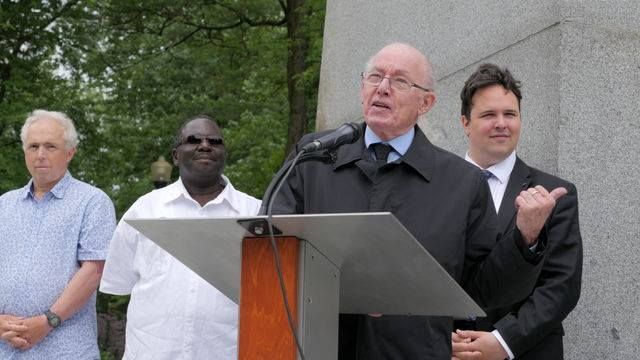
Towards the end of the 1980s, Lucner Benoit (T-Ben) was a young political activist of Haitian social democracy within the National Committee of the Congress of Democratic Movements (CONACOM). The first democratic elections ended in a bloodbath on Vaillant alley in Port-au-Prince, which hardened leftist militancy against the military power of General Prosper Avril.
Meanwhile, in Montreal, another activist in the Haitian community in Quebec, Serge Jovin, used his connections within the Parti québécois (PQ) to help Haitian activists in their struggle. "The Haitian intelligentsia sided with the PQ at the time," T-Ben recalls today. The first Black member of the Quebec legislature was Jean Alfred, a teacher of Haitian origin from Outaouais, elected in 1976 with René Lévesque.
The party delegated two members to Port-au-Prince, including André Boulerice from Sainte-Marie-Saint-Jacques since 1985. For a week, the Quebec politicians provided training to the militant pack and sold them the Quebec independence project.
"His discourse appealed to us as social democrats. He sold us the Quebec independence project and I was amazed, I fell under the spell," recounts Lucner Benoit in an interview with In Texto.
"It convinced me, because I can't imagine that my grandchildren wouldn't be able to flourish in complete independence," he adds. Due to the political situation and given that his parents already lived in Montreal, Lucner Benoit joined them in 1991.
1995, he already votes YES
Once arrived in Quebec, T-Ben dove headfirst into the independence movement. Four years later, the 1995 referendum took place. He voted YES even before beginning his formal and official commitment to Quebec independence in 1998.
And even after more than thirty years in the province, the idea of sovereignty remains the first option for him. "No, nothing has evolved, it's even worse now. Because we've been had several times," the activist says loudly, referring to the failed referendum attempts.
His conviction for independence, he says he bases it on "Quebec culture, language and values" different from the rest of Canada. It's the same argument of today's PQ leader.
"You just have to take into account the state of French, in other words, our way of thinking, of living, but not just academically. You have to distinguish between speaking and Quebec culture," believes Mr. Benoit.
Racism or "human nature"
A perception of racism hovers over today's Péquiste anti-immigrant discourse. Under the guise of defending French, "Quebec values," like François Legault's Coalition avenir Québec, Paul Saint-Pierre-Plamondon blows even harder on the identity embers.
It's electorally profitable in the regions. But immigrant communities perceive insidious racism.
"Where there are humans, there is human nature. This racism issue exists across all societies. I can't make this issue one for the future. We need to work on it," pleads the activist of Haitian origin, Lucner Benoit, when questioned by In Texto on this aspect.
The Bloc québécois leader had lectured the PQ following the Terrebonne by-election by reminding them that you don't attract flies with vinegar. "Mr. Blanchet is a politician, he needs votes, he can say what he wants," retorts Lucner Benoit who defends the independence project tooth and nail.
"Since my membership in the PQ I have only seen open, devoted people. I believe and I am certain that there is no party on the Quebec political scene more devoted to the Haitian cause than the PQ," affirms T-Ben.
Rewarded
But how to convince the Haitian community that independence would be the best option?, the newspaper then asks him. "It will come, we're not in mathematical calculations, but in human and social sciences," responds the Péquiste activist who knows the Haitian community well as he belongs to it himself.
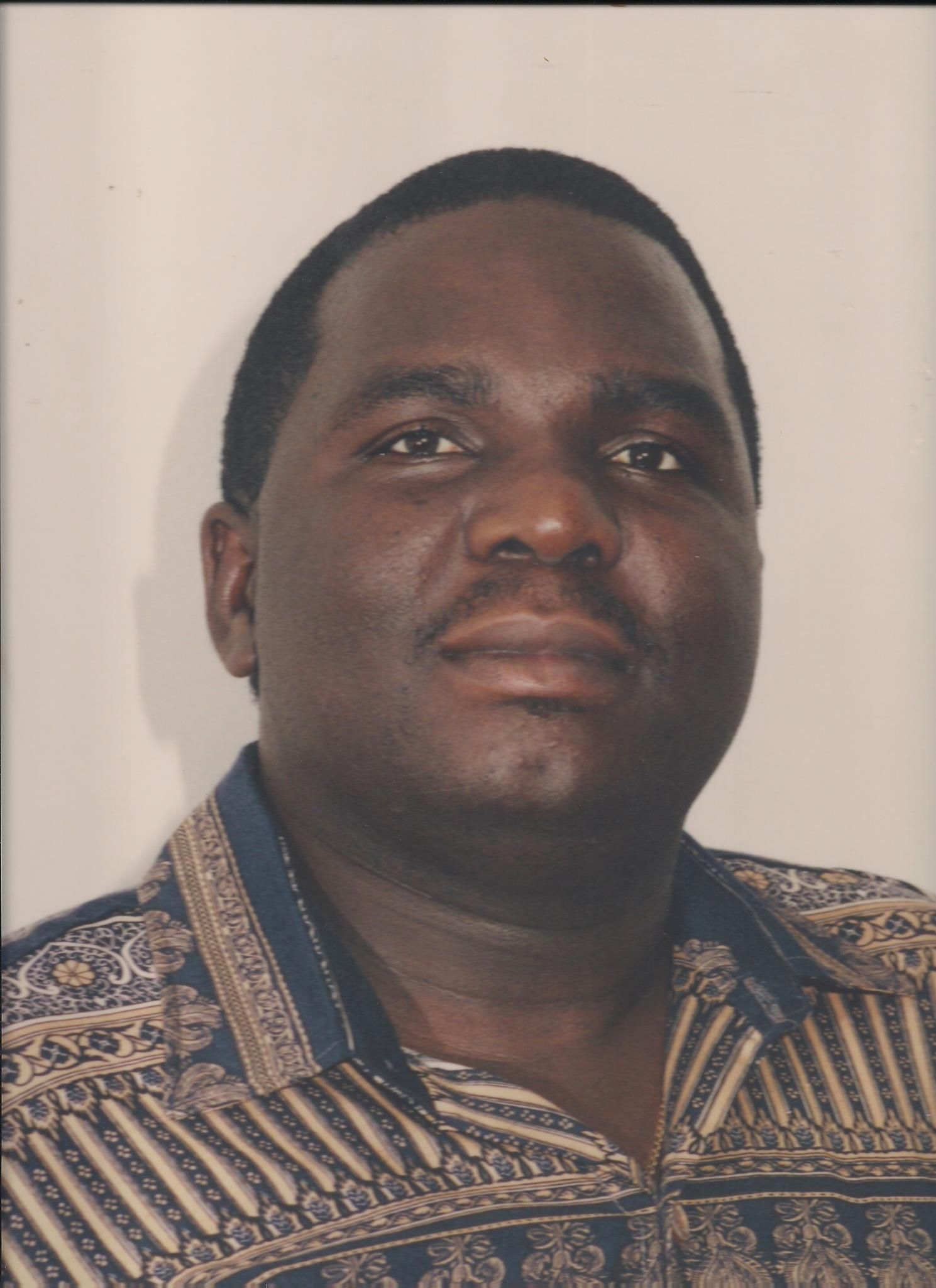 Lucner Benoit
"I am proud to be among them, the independentists," hammers the Quebecer of Haitian origin. Moreover, he just received the Charles-Hindenlang Prize 2026, from the "Rassemblement pour un Pays Souverain." A distinction that will be awarded on May 18th in the context of National Patriots Day.
"The Charles-Hindenlang Prize aims to recognize a Quebec personality from immigration for their commitment to Quebec and the French language and their great contribution to the advancement of patriotic and independence causes," indicates the organization in a press release.
Mr. Benoit is currently an administrator within the General Council of the Société Saint-Jean-Baptiste de Montréal and ensures an independence presence within the Haitian community.
"We warmly thank the recipient of the Charles-Hindenlang Prize 2026, Mr. Benoît, for having accepted the distinction."
He will be present to receive the prize at the Patriots Gala Dinner which will be held on May 18th, at 5:30 p.m., at the Sainte-Germaine-Cousin hall, located at 510, 55th avenue, in Montreal (Pointe-aux-Trembles).