
Social workers from Haiti admitted to the Ordre thanks to Option protection
Jean Numa Goudou ·
The OP program, born from an original idea by the Executive Director of BCHM, Ruth Pierre-Paul, enjoys not only official recognition from the Quebec government and the Ordre, but also from Universities.
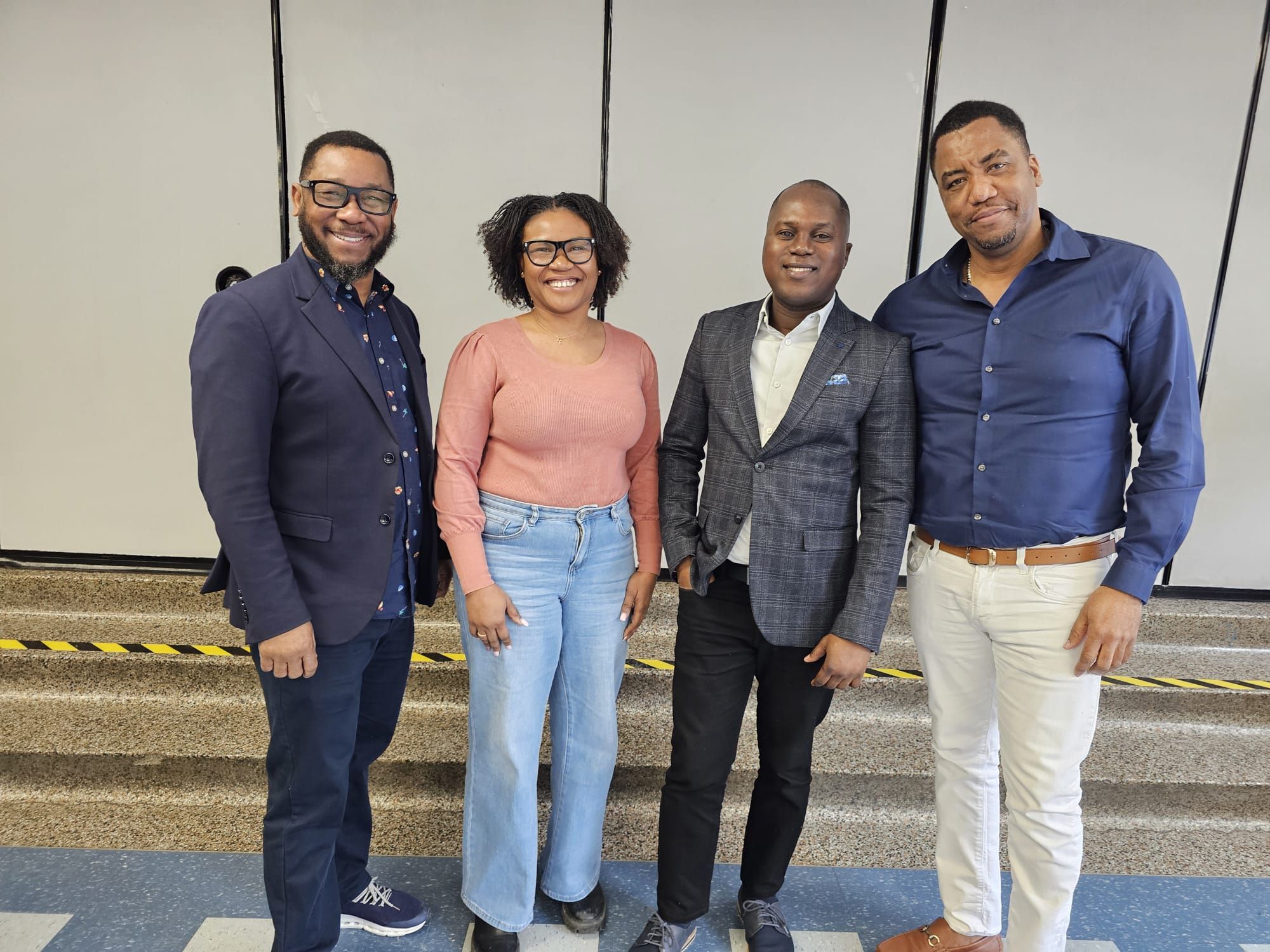
Trained in Social Work (SW) in Haiti, Jacquelin Deranne, who arrived in Quebec in 2013, was unable to join the Order of Social Workers despite his efforts to have his credentials recognized. The Quebec Ministry of Immigration, Francization and Integration (MIFI) classified him at a Grade 11 level plus one year of study, despite his four years at the Faculty of Human Sciences in Port-au-Prince.
"I spent six years thinking about that assessment," the social worker confides in an interview with In Texto. One day, Jacquelin gathered his paperwork and decided to go see the Ordre des travailleurs sociaux du Québec (OTSTCFQ) with it. He submitted his documents and went home.
Four hours later, he received an email inviting him to a recognition interview. "I missed a few ethics-related questions," he recalls. The approach to social work is not the same everywhere. Jacquelin Deranne managed to find four courses (12 credits), outside of a regular program, at Université Laval in Quebec City.
At the same time, he found a position as a caseworker at the Bureau de la communauté haïtienne de Montréal (BCHM) through the Option Protection (OP) program. "After the courses, I needed an 800-hour internship," the social worker explains, "which I completed with Option Protection. That's what allowed me to join the Order."
The path taken by Jean-Reynold Saint-Hilaire, who arrived in Quebec in January 2021, was less arduous. Like Jacquelin Deranne, he was trained in social work in Haiti and had completed 420 hours of internship before arriving here in Quebec.
The BCHM was launching an employability program as part of OP. Jean-Reynold secured a position there and completed the 800 hours required to gain entry to the Order.
Having arrived in Quebec in 2022, in the midst of the pandemic, as an international student, social worker Medjine Laguerre enrolled at the Université de Montréal for a master's degree. In the meantime, she worked within OP, which provided her with significant opportunities for her research. Combined with her master's degree, this also allowed her to access the Order more easily.
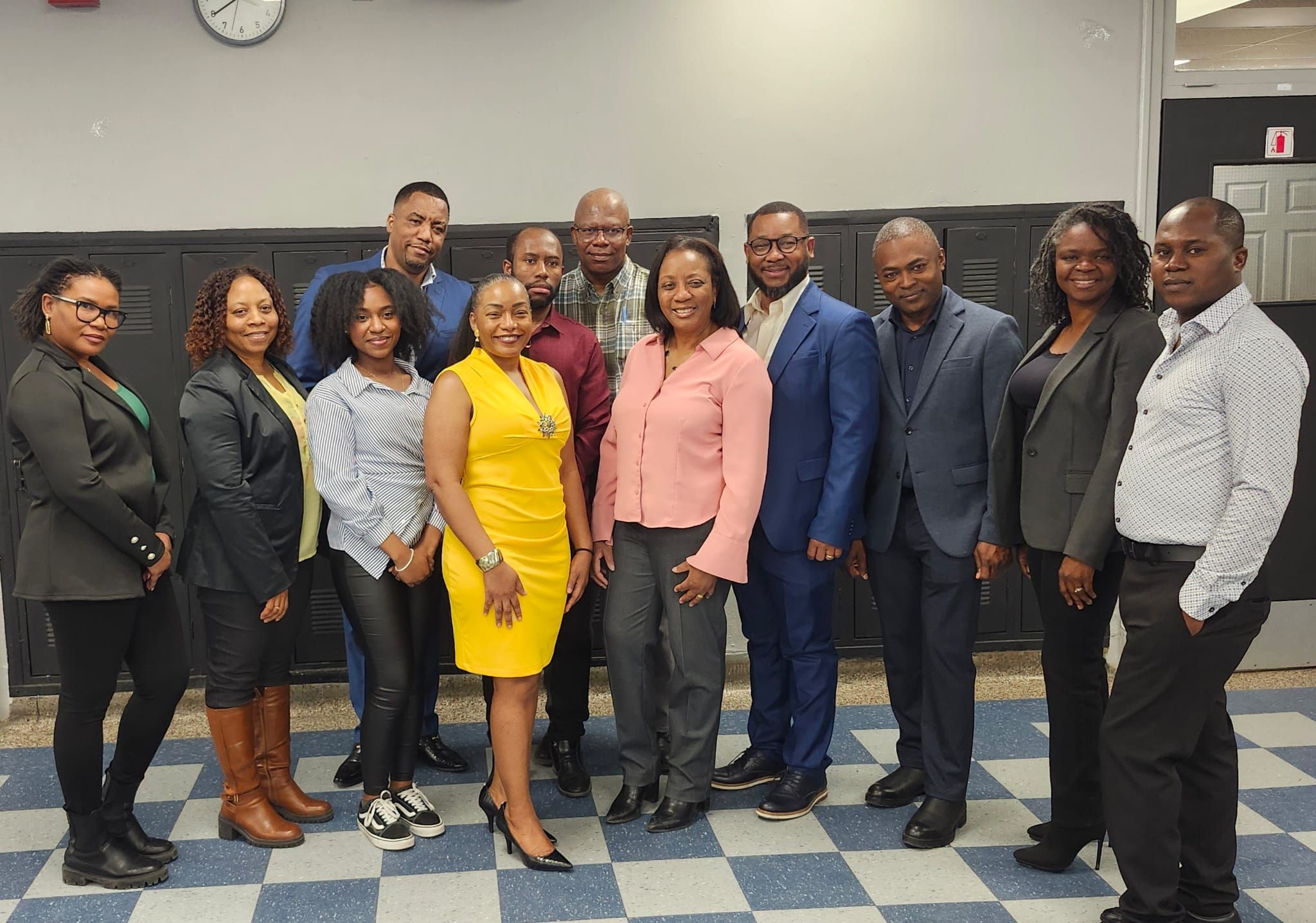 Some members of the Option Protection program
OP sets the standard
Drawing on its experience, the OP program has established a SW internship aimed at young students from the community. Clinical activity specialist Rigaud Saint-Amour not only supervises the caseworkers, but also supports social workers trained in Haiti.
About twenty of them, out of more than 30 identified in Montreal today, have been located. In total, half a dozen of them have managed to join the Order through OP.
"Well trained! They are very well trained," says Mr. Saint-Amour. "It was extraordinary the way the Order opened its doors to welcome our support, to help people trained abroad become members of the Order."
The OP program, born from an original idea by BCHM Executive Director Ruth Pierre-Paul and supported by Marie-Pierre Ulysse (Board Chair), enjoys not only official recognition from the Quebec government and the Order, but also from universities. UdeM and Laurentian University in Ontario are in discussions with the BCHM about partnerships to provide internship placements for their students.
Black families "preserved"
"I am impressed," says Marie-Pierre Ulysse (master's degree in SW). "We never imagined these outcomes. The number of children protected, the support the program brings to the community. It is a wonderful achievement."
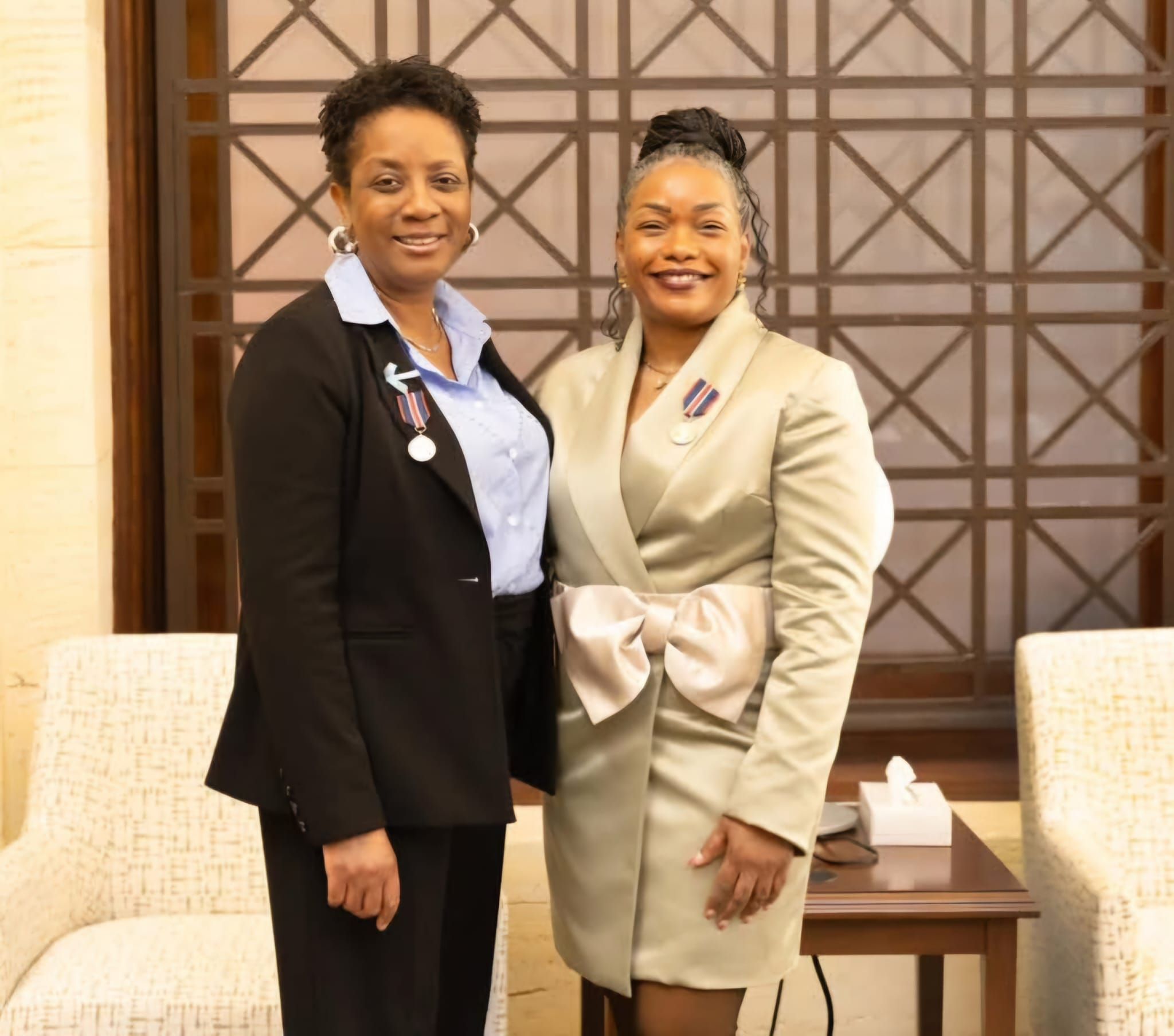 Marie-Pierre Ulysse, BCHM Board Chair, and BCHM Executive Director Ruth Pierre-Paul
She wrote this program and worked for eight months as a volunteer before finding funding to hire caseworkers. Today, 2,200 Black children have been spared from the foster care system of the DPJ.
"These are families that have been preserved," she now says with pride. "The families are not reported afterward, even though their working conditions, housing, and other social determinants have not changed," she notes. All of this thanks to an improved parent-child relationship.
Option Protection is an innovative partnership between the CIUSSS du Centre-Sud-de-l'Île-de-Montréal and the BCHM, established in response to findings of the overrepresentation of Black children in youth protection services and the systemic challenges faced by youth and families in Black communities.
The BCHM and the CIUSSS du Centre-Sud-de-l'Île-de-Montréal decided to take a different approach and offer additional support to families. The Option Protection program also aims for social transformation:
Through the BCHM's collaboration with various systems (DPJ Directorate, Youth Program Directorate, schools, CLSCs, police, justice) in order to improve interventions within Black communities. This article was written as part of Social Work Week, March 23 to 27.