
She brought Haiti to the World Cup
Jean Numa Goudou ·
In 2020, a series of scandals hit the Haitian Federation, which lasted about four years. Ultimately, FIFA called upon her to head a Committee to normalize the situation.
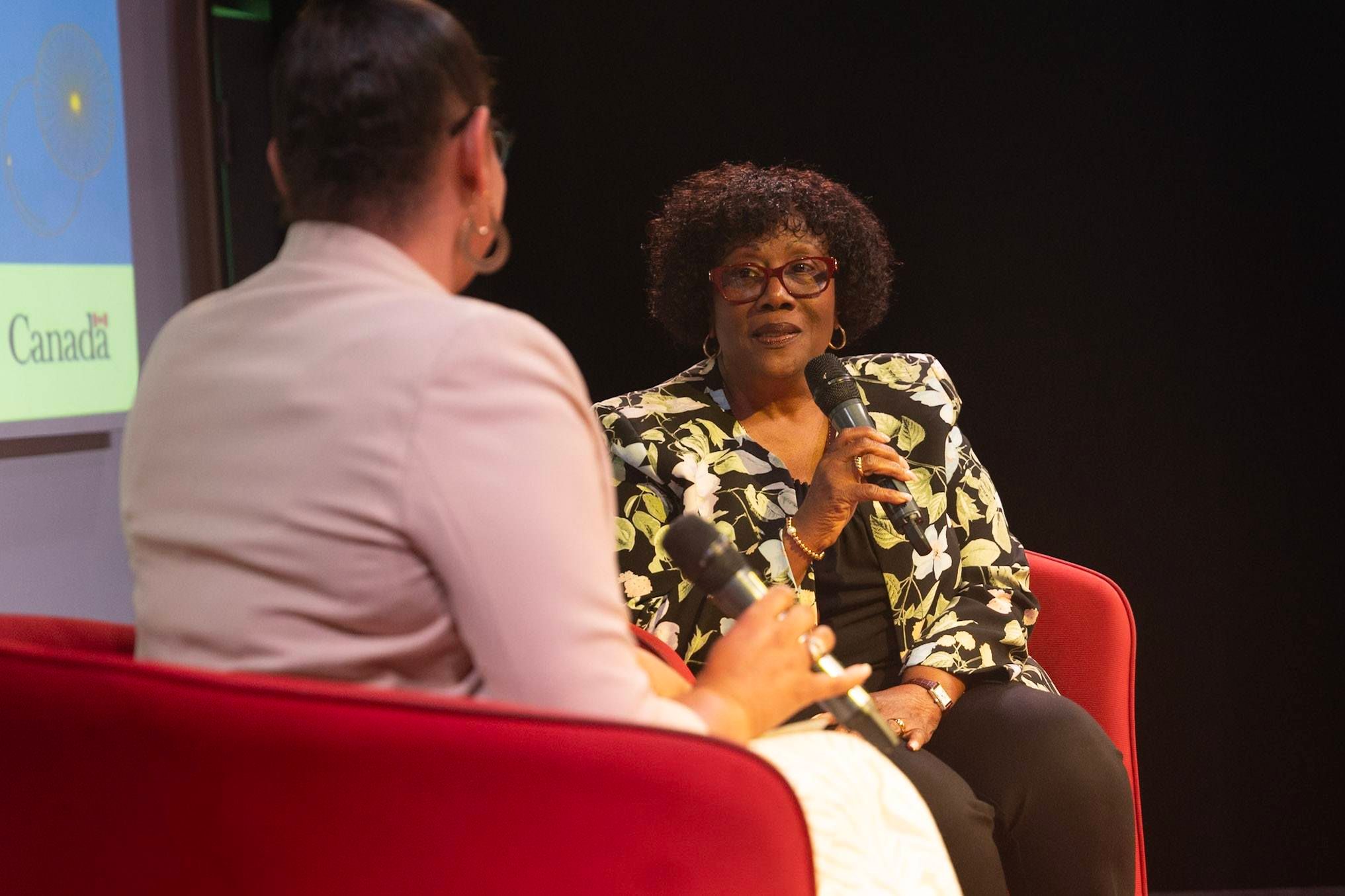
She is a pioneer of women's football in Haiti. In December 1971, Monique André put on cleats during the first women's match that took place in Port-au-Prince between two colleges. "I participated and mainly played right back, despite my mother's opposition who said: girls don't play football," reveals the president of the Haitian Football Normalization Committee during a conversation with Arcelle Appolon, director of Maison d'Haïti.
The organization offered a reception in honor of Ms. André on the occasion of her visit to Canada as part of the Football World Cup. The elite of the community attended.
The only daughter of an iron woman, young Monique had to distance herself from the sports environment. Then she left Haiti to study in Spain, "a football country," she recalls.
"I always lived very close to this sport, I attended training sessions and was very involved before leaving the country," indicates the president of the Normalization Committee. This, at the same time, did not prevent this woman, who dreamed of becoming a flight attendant, from living close to her other passion.
After her studies, Monique André worked in the travel industry for Air France (13 years) American Airlines (10 years) before founding her own agency 20 years ago.
FIFA and women
In 2006, while she was launching her business, she was invited by the then-president of the Federation to lend a hand, which she accepted. Ms. André handled travel arrangements for players and the team. "I helped them a bit with everything," she says.
So much so that in 2012, she was invited to join the team permanently and officially. She was therefore elected, as the first woman, to the Haitian Football Committee. It should be noted that this was thanks to new FIFA requirements that demanded "a female presence" among leadership.
In 2020 came a series of scandals within the Haitian Federation, which lasted about four years. Ultimately, FIFA called on her to head a Committee to normalize the situation. "I hesitated," she says, "but I was already on the boat, so I stayed." And since then, she has been part of a small circle of about 11 women among 211 people holding decision-making positions in world soccer.
"Sometimes I realize that I'm the only woman in meetings," testifies Ms. André, after hesitation, "I tell myself: but my place is there and it belongs to me as a woman too."
For several years, FIFA has valued female presence among world football leaders. It now requires that coaches of women's teams be women.
Haiti's participation and the diaspora
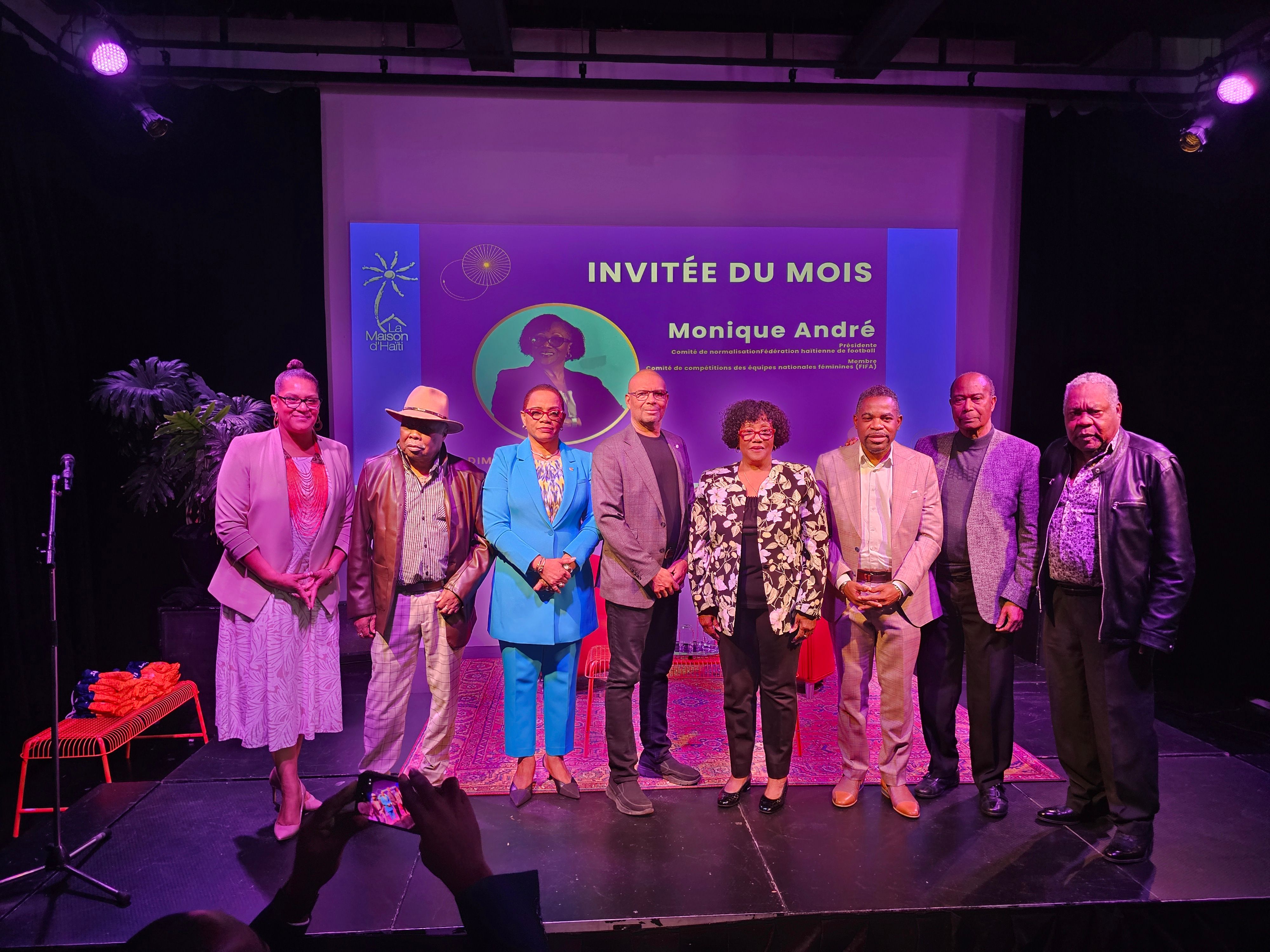 Several Haitian football enthusiasts in Montreal took part in the event as well as the chargé d'affaires from Port-au-Prince, Marie-Françoise Suzan.
Asked about Haiti's return to the World Cup, which hasn't happened since 1974, Ms. André refuses to take the credit alone. "It's the work of an entire team. Yes, I lead it, but you have to forget yourself in order to give everyone the place they should occupy. The administrative machine must bring the entire base together and align its work with that of the technical staff," preaches the Haitian football leader.
Most of the players on the Haitian team come from the diaspora. Sons of Haitians who decide to wrap themselves in the blue and red colors (the flag). In this sense, Monique André believes that the diaspora's role is major.
"The players are the children of the diaspora. There were some who hesitated to get involved, today, they're stepping forward. I thank the diaspora for this work," says Ms. André during her visit to Maison d'Haïti. She says she draws inspiration from her mother's courage and determination and calls on all women not to hesitate to take their place.
"Women play and football administration is also open to women. The trend today is to have women who lead women's football," explains the right back before emphasizing: "You must dare, ladies."
Initiatives and reforms
Monique André has launched several initiatives to improve Haitian football, notably strengthening governance structures, protecting young players, implementing complaint management mechanisms aligned with international standards, and a strategic plan for women's football.
She is considered a figure of continuity, rigor and results in Haitian football. Her leadership inspires hope for the future of national football.