
Post 39: the SPVM's charm offensive convinces no one
Alain Babineau ·
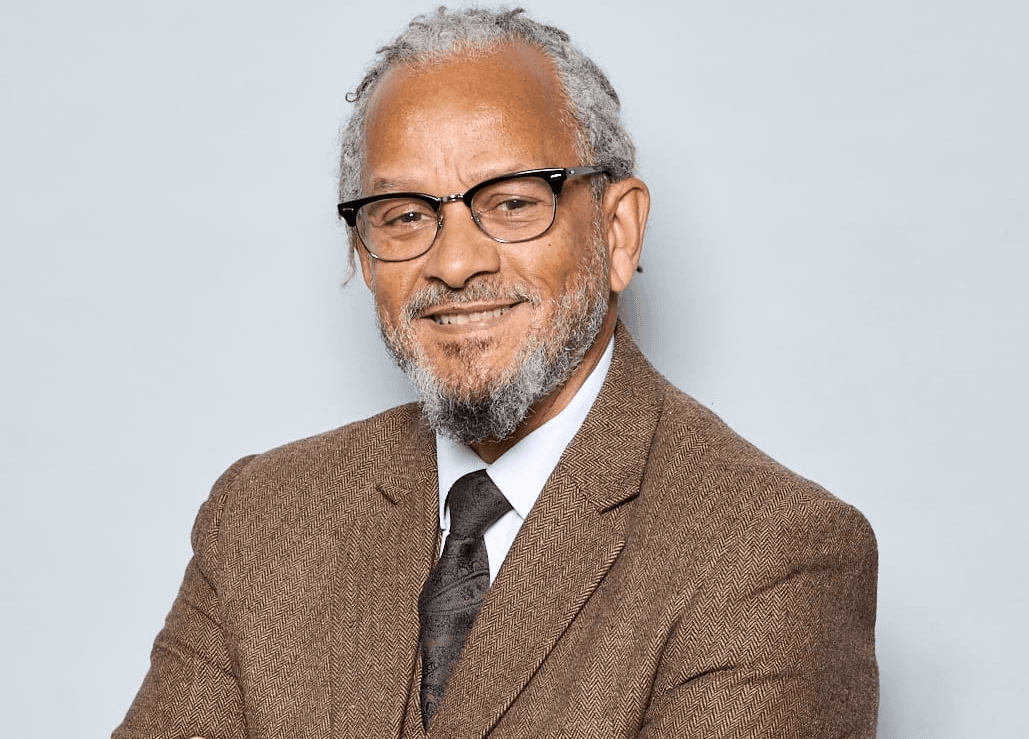
Alain Babineau, JD/BCL, BA Laws, BA Crim, GDCR, is director of racial profiling and public safety at the Red Coalition, director of rights advocacy at the BCA Secretariat, and a retired staff sergeant of the RCMP.
On June 12, SPVM (Service de police de la Ville de Montréal) Chief Fady Dagher used an extraordinary press conference to dismantle an entire night patrol team from precinct 39, in Montréal-Nord — sixteen officers targeted, two suspended, one file referred to the DPCP.
Since then, the police chief has multiplied his smiling public appearances: a mosque in Saint-Léonard, Montréal-Nord on more than one occasion with the new commander of precinct 39 by his side, and — according to my own community network — the Haiti en Folie festivities, the West-Island Black Community Association (WIBCA), and the Jamaica Association of Montreal. In short, all of Montreal's French- and English-speaking Black communities, who have been told for decades that "we'll do better." They have every right to be exhausted hearing the same refrain.
I will say it plainly: this public relations exercise will bear no fruit. Not because I doubt Mr. Dagher's good faith — I have no reason to — but because no handshaking tour can repair what a chain of supervision allowed to fester for years. Polishing an image is not the same as repairing an institution. And the real test, the one on August 11 at city hall, promises to be far more demanding than the community gatherings of summer.
I. What the July 22 meeting revealed
On July 22, Mr. Dagher returned to Montréal-Nord, this time accompanied by the brand-new commander of precinct 39, Maxime Saint-Pierre, who replaces Hélène Mercier, who retired in the wake of the scandal. The account provided by Sasha Wilky Marazil on social media, and by Jean-Numa Goudou in Intexto — "Montréal-Nord: the blind spots in SPVM recruitment" — deserves careful attention, because it documents exactly the problem this piece seeks to denounce.
Mr. Dagher confirmed there that "everything you saw and heard in the media is pretty much true," before moving on to discuss recruitment mechanisms, interviews, and background checks — only to concede: "We are in the process of doing some introspection. We do all of this, but how did it slip past us?" A resident asked him how many years of service the officers accused of cutting and collecting the hair of apprehended Black men — as trophies — actually had. "On average 3, 4, or 5 years," the director replied. Another resident expressed dismay that we were still at this point despite all the training provided. Good question. Insufficient answer.
Yet according to this account, it was largely citizens who have no issues with the police who came to congratulate the SPVM — while the Black and Arab individuals present, three to four times more likely to be stopped, were attempting to raise issues related to the DPJ and immigration. So let us ask the question bluntly: has the precinct 39 scandal, announced with great fanfare on June 12, already been forgotten by some residents of Montréal-Nord — of all backgrounds — while those most directly affected still struggle to be heard in their own neighbourhood?
Mr. Dagher nevertheless promised to return "by November"! One more promise, stacked upon decades of promises. It is precisely this cycle — meeting, smiles, promise to return, silence until the next crisis — that the affected communities have learned, at their own expense, to no longer confuse with reform. Enough is enough.
II. Supervision is not a popularity contest
I wore the RCMP uniform for more than twenty-eight years, including several as a staff sergeant responsible for supervising operational teams. As a manager and supervisor, I occasionally had to have difficult conversations with officers who had "strayed" from the right path. I sometimes had to report to my superiors situations that went against our rules and organizational values — because that is the job when you accept the rank. Being a supervisor or manager is not a popularity contest.
These are positions that carry considerable responsibility — and when those who hold them fail in their duties, systemic problems take root and then become very difficult to eradicate.
That is the crux of the problem at precinct 39. A team does not develop abusive policing practices overnight, nor gestures as overtly dehumanizing as those alleged against them. These practices take hold gradually, under the watch of a chain of command that either fails to document them, or documents them without ever following through. The Code of ethics of Quebec police officers (RLRQ, c. P-13.1, r. 1) imposes obligations on every officer — but no code of ethics replaces conscientious front-line supervision: performance evaluations with real follow-up, genuine mentoring, early flagging of disproportionate stop-and-search patterns. Without that, the code is nothing more than text posted on a wall.
A community outreach tour, however well-intentioned, corrects none of this. It manages an image while the repair of the supervisory chain itself is delayed. And while the image is being managed, the communities continue to bear the cost.
III. The real appointment: August 11, Salle des Armoiries
The public discussion on the situation in Montréal-Nord was initially scheduled for July 8. It was postponed out of respect for the public funeral, held on July 7, of Officer Mohamed Lamine Benredouane, killed in the line of duty during the June 22 shooting in Côte-des-Neiges — a genuine tragedy, but one entirely unrelated to the precinct 39 file. The new date is set for Tuesday, August 11, at 6 p.m., in the Salle des Armoiries at Montreal City Hall, under the auspices of the Commission de la sécurité publique.
This postponement gave the SPVM five additional weeks — five weeks the director chose to fill with community visits rather than with the publication of a clear timeline of corrective measures for precinct 39, such as an end to arbitrary stops. On August 11, the audience of critics will necessarily be far larger than at the neighbourhood gatherings: elected officials, legal experts, community organizations, the Fraternité des policiers, and citizens who will have had all summer to prepare their questions — for the director, but also for the precinct 39 team, past and present. The smiles of July will not survive long under questioning before a public audience, under the lights of a webcast, in a room that bears the name of armoiries rather than that of a community centre. Answers will be required, not platitudes.
Conclusion
Defending the idea that the SPVM can reform itself has never meant extending unconditional credit — I have written as much elsewhere, and I stand by it. But a round of community meetings is not reform: it is, at best, a public relations exercise that buys time. Montreal's Black communities — French- and English-speaking, Haitian, Jamaican, Caribbean — do not need to be visited. They need the elimination of an illegal and immoral practice for which "guidelines" lead nowhere, front-line supervision that actually functions, accountability that does not depend on the chance occurrence of an internal whistleblowing, and a verifiable timeline of corrective measures. As long as these elements remain absent, every new meeting — however warm — will only delay the moment of reckoning.
That moment will come on August 11, at city hall. Be there!
Alain Babineau, JD/BCL, BA Laws, BA Crim, GDCR, is Director of Racial Profiling and Public Safety at the Red Coalition, Director of Advocacy at the BCA Secretariat, and a retired RCMP Staff Sergeant.