
Haitians from Boston and Montreal will not attend the match due to lack of money
Jean Numa Goudou ·
With 6 million seats available, FIFA received more than 507 million requests, which explains the high cost of tickets.
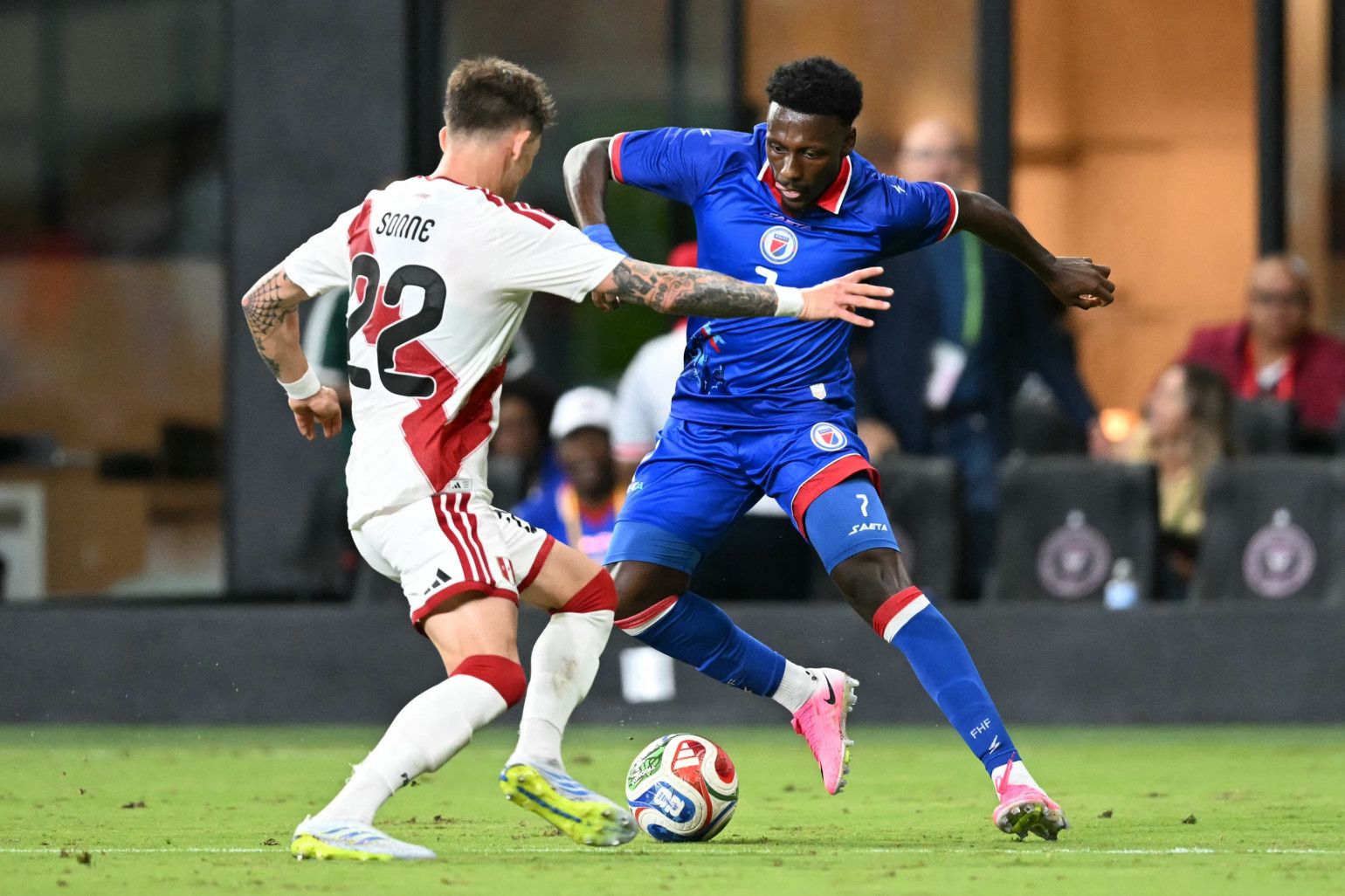
"We are in Boston, we thought it would be easy, but that's not the case," laments Lesly St-Julis. He thought he could bring his family and even friends to attend Haiti's match taking place just a stone's throw from his home, but ticket prices, up to $1,300 each, have cooled his enthusiasm.
This is also the case for Bovil Jean-Karil. In addition to the ticket, the cost of transportation and pocket money for refreshments make them think twice. "You can buy a ticket and not be able to enjoy it," he adds. Due to the presence of ICE immigration police, many Haitians, whose immigration status is not stable, fear a police raid.
"Many Haitians don't want to take the risk and are keeping a low profile because of this," says Bovil Jean-Gary. "People will gather together somewhere for the community event. Others will stay home with family to watch the match," observes Lesly.
In community
Due to ticket costs, many Haitians from Montreal, about 4 hours by car from Boston, are declining to participate in person in this first Haiti match. The country's last participation in a World Cup dates back to 1974. This is therefore historic for several generations.
Several Montreal organizations including the Bureau de la communauté haïtienne de Montréal (BCHM) and Maison d'Haïti are organizing community viewing parties of the match on big screens. "Grenadiers of Montreal and surrounding areas, join the big family of the Bureau de la communauté haïtienne de Montréal (BCHM), to live a unique and unprecedented experience, awaited for 52 years," the organization calls in a public note.
This will take place in the heart of downtown at Maison France-Montréal, 429 Ave Viger E, Montreal, QC H2L 2N9, four minutes from Champ-de-Mars metro. Three unforgettable evenings with DJ SIR-D, RaraJazz and food available.
• Haiti vs Scotland — Saturday June 13 — 9:00 PM • Haiti vs Brazil — Friday June 19 — 8:30 PM • Haiti vs Morocco — Wednesday June 24 — 6:00 PM.
Doors open 1 hour before each match and there are 500 seats available.
Maison d'Haïti also invites you, on the same dates and at the same times for the three matches at its location in Saint-Michel, 3245, avenue Émile-Journault, Montreal (QC) H1Z 0B1.
Some well-known Haitians will make the trip
John Miller Beauvoir, John Wesley Delva and Édouard Staco are among the lucky ones able to make the trip. Several months ago, Mr. Staco participated in a lottery to have the right to buy tickets. Tickets started at $250 and could go up to more than $1,000.
He came out a winner of this draw, among hundreds of people. With his family, he will make the trip by car to Boston to take part in this "historic" event for him. "It's a unique event. Having a World Cup with Haiti's participation. We said we're going to do it," he says in an interview with In Texto, "but it's really not accessible to everyone."
Some other personalities from Montreal's Haitian community have also made the trip. Tickets are two and even three times more expensive than the last World Cup, observes the one who chairs the Sommet afro. He denounces a very commercial side of this mass sport that has become elitist.
"What I don't find very interesting from FIFA is that there's a supply and demand aspect," he says, "some matches are more expensive than others. There's a commercial aspect. And not everyone has access to it."
There are 6 million seats available for this World Cup. And FIFA received more than 507 million requests. "That's why tickets are so expensive," points out a source close to the Haitian Football Federation who deplores that Haitians blame them for all the failures of this Cup.
The most expensive in history
In accordance with FIFA regulations for the World Cup, each participating federation is normally allocated a quota equivalent to 8% of the total stadium capacity for each match. These seats are reserved for official supporters of qualified teams, through member associations.
FIFA specifies that each participating federation is responsible for managing requests, defining its own eligibility criteria and distributing or selling its quota to its loyal supporters. There are several ticket categories: half (50%) of this inventory is divided between the two most affordable categories: "Economy Tribune" tickets (40%) and "Basic Tribune" tickets (10%).
"Fans wishing to benefit from these seats must generally go through their federation's official membership platforms (like CanadaRED for Canada) to obtain a unique access code to FIFA's portal," the organization's website indicates. A tedious process that had to be undertaken very early, like Édouard Staco.
FIFA had determined that the Haitian Federation could buy a thousand tickets per match to resell them. In total, Haiti acquired 3,000 tickets, on credit, our source at the Haitian Federation tells us.
"This is the most expensive World Cup in history," recalls the Haitian Football Federation.