
Compas will never be played solo
Pierre-Phaill Goudou ·
Together, whether as an Ensemble, a Group, a Djazz, or a musical formation, these enterprises constitute the watchdog of kompa.
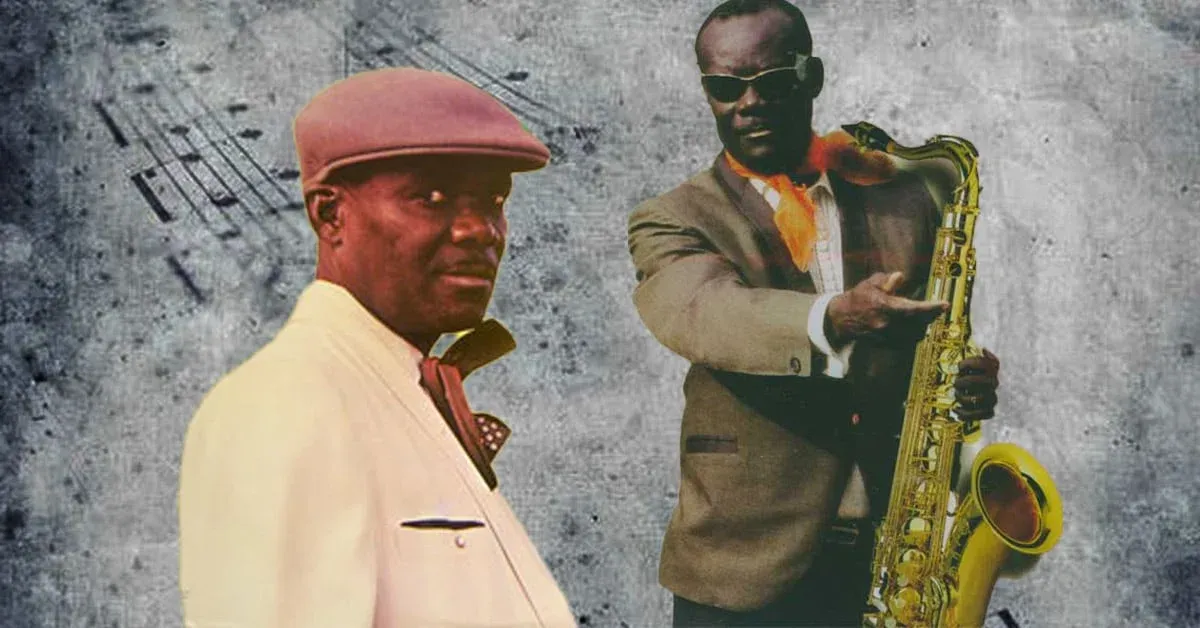
A musical group (a Djazz) is first and foremost a business. And, as a commercial entity, it creates direct and indirect jobs through its activities. The Djazz is subject, just like other businesses, to the laws and principles of the industry.
Its leaders need human, material, and financial resources to ensure its proper functioning. Above all, it requires a strategy that includes product quality, affordable pricing, a promotional and distribution campaign, and positioning capable of facilitating access to the product.
Like other organizations, musical groups draw their human resources in three main ways: a group of musicians, sharing the same passion for music, join together and form their band. This is the case of Tabou Combo.
One or more entrepreneurs, seeking to build wealth, invest in the creation of a musical group and recruit musicians. This is the case of Djakout Mizik. The success of a singer or instrumentalist can also lead to gathering musicians around them and creating their group, as in the case of Antoine Rossini Jean Baptiste (Ti Manno). Or a family culture, as with T-Vice.
Grand Disruption
Regardless of the musicians' level of talent or the musical group's origins, it cannot escape these dynamics. However, it is important to recognize that the field of music and the other professions linked to it have their own particular characteristics.
All businesses undergo changes and innovations that affect markets. The flow of Haitians who have left the country and continue to do so has an impact on all sectors of national life. Some businesses lose their key employees, on whom 80% of their revenue depended. While others face such a significant number of employees abandoning their posts that they can no longer continue their operations and lose their clientele.
As key elements of the cultural and creative industries, our musical groups are not exempt from this reality. This exodus has relocated the Haitian music market to the major cities of the diaspora (New York, Miami, Boston, Montréal, and Paris). Faced with new challenges abroad, our artists and musicians struggle to launch or relaunch their careers and turn to other fields or professional activities to meet their needs, some against their will.
Faced with this multidimensional crisis in Haïti, this misdirection must be analyzed, understood, and placed in the global context, oriented toward the search for an integral and coherent solution.
The Different Emotions
An indispensable part of our national culture, compas has played the role of ambassador for Haïti on the international stage since its beginnings. As compas was created for dancing, several instruments contribute to the composition of its rhythm. As such, this music promotes collective sharing and fosters collaboration among multiple instrumentalists and singers during its performance. Compas is not performed as a One Man Show, even though it leaves enough room for solo artists.
Embedded in the DNA of Haitians for several decades, this music has undergone many changes and evolutions throughout its history. However, compas has managed to preserve its identity and its mission, and must not go against the current of its history. Nemours Jean Baptiste created compas wanting to give an entire social class a music of their own.
A dancing rhythm, compas expresses joy and amusement by inspiring gaiety, it stimulates energy and motivation while offering pleasure. As proof, titles such as Plezi gaye and Jwi la vi take on their full meaning.
A rhythm of all feelings, it promotes calm and relaxation as well as fear and sadness (David by DP). Ultimately, it is a rhythm capable of carrying emotions, ranging from soothing to excitement. It is a living and vibrant music that engages the eardrums by stimulating the auditory system of music lovers.
Our Groups or Schools for Transmitting Compas Direct
Ensemble, Group, Djazz, or musical formation — these businesses constitute the guardians of compas. Compas is not based on strict rules, structures, or notations like classical music. It is not a codified or solfège-based music with scores, theories, or genres defining its composition and interpretation. However, like other rhythms, one must be a compas musician to play it.
In his text published in the columns of Le Nouvelliste in August 2015 and entitled "La face cachée du Compas direct," one of the creators and maestro of the first Haitian mini jazz, Les Shleu Shleu, Serge Rosenthal wrote:
"The solo-melody consists of a succession of two or three short musical phrases repeated two or three times. Being a virtuoso or a great instrumentalist who can read and write musical scores gives absolutely no access to such creativity. Everything happens within the musician, who must draw inspiration from within themselves alone in order to transmit that flame to their audience."
The guitarist, musician, and composer was speaking about the particularities of Compas direct in its interpretation and execution. The first and primary school of compas is the musical groups (the djazz). Discouraging the creation of musical groups means inadvertently — perhaps — hindering the building of compas schools.
A Unique Ensemble Performance
In a conversation with In Texto, guitarist, singer, and composer Claude Marcelin explains that to train in the field of compas direct, one must choose a model to study, copy it while adding their own identifying touch. No music school could have provided him with the knowledge and experience acquired within Les Difficiles de PV, DP Express, Zéklé, and through to Djakout Mizik. For him, compas is a cultural identity carried by a spirit that inhabits Haitians and is rooted in the country's traditions. It thus becomes the musical soul of Haïti.
From the guitarist of the Nemours Jean-Baptiste ensemble, Raymond Gaspard, to the guitarist of Les Shleu Shleu, Serge Rosenthal, passing through Andre "Dadou" Pasquet and on to the most seasoned guitarists of our era, all owe a significant part of their skill to the musical groups they were part of, estimates Claude Marcelin.
The guitarist says he remembers his experience with that music virtuoso, Tony Jean Baptiste, within Djakout Mizik, whose talent and knowledge as an arranger are incomparable. But the secrets of compas direct were not his strong points at the time.
Compas direct, as we know it today, is very different from the compositions of the 1950s and 60s. The rhythm has undergone changes and has experienced mutations and evolutions. "Chak jenerasyon pote w inovasyon, si pate gen chanjman mizik antiyièz la tap tré monotone," the words from the song "Siro" by Tabou Combo.
The explosion of Mini-Jazz in the mid-1960s lasted no more than 10 years when Antillean groups like Les Aiglons and Exile One invaded the Haitian music market with titles like Cuisse la and Rosita. The success of these songs in Haïti pushed the river back to its bed. And the success of the albums Guêpe pangnole by Skah Shah (1974), Tribulations by Bossa Combo and Haïti by Djet-X (1975), Bouki ak Malice by Frères Desjean (1976), followed by Map mande courage by Scorpio and Voye monte by Tabou Combo (1979) and David by DP Express (1980), is proof that compas was able to reclaim its prestige.
Introduced into compas direct by Top Vice in 1986, the drum machine allowed for a reduction in the number of musicians on stage. This technology facilitated creation and contributed to the success of an entire trend still known under the term Nouvelle génération. In the late 1990s, the success of the group DZine, the album Easy Compas by Zenglen, the creation of Nu-Look, and the rise of Djakout Mizik pushed the drum machines back to the roots of compas direct.
Groups like Sweet Micky and T-Vice were compelled to reintroduce the drum kit, gong, and tambour into their lineup.
In the age of Artificial Intelligence (AI), composing a song has become easier than ever. How to encourage human works, what future lies ahead for our musicians, composers, and arrangers, and what can be done to protect the copyright of their works? — these are pressing questions.