
Black elected officials: how to "protect themselves, raise awareness and take action"?
Rédaction Intexto ·
The caucus of Black elected officials from all levels of government met on February 21, 2026.
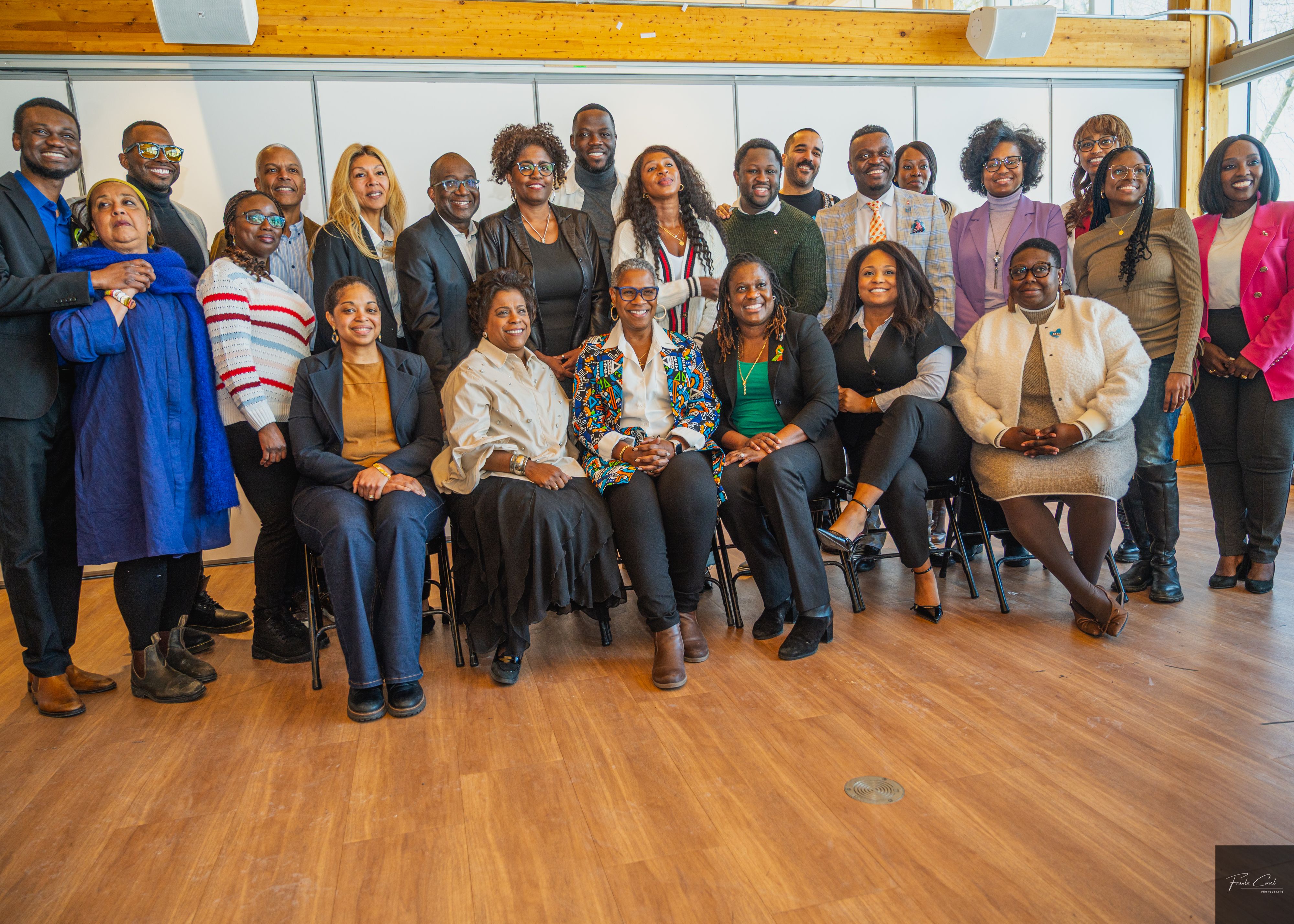
Following the latest elections and due to political upheavals, the face of the black elected officials' caucus is changing. But even among those who lost the elections, some have come to the meeting, which pleases Philippe Thermidor, borough councillor in Montréal-Nord. He feared "disengagement" from these involved Black individuals.
At the municipal level, out of 82 Afrodescendant candidates on the island of Montréal, there were 74 new ones. Only one is victorious, barely 1%. The City councillor in Villeray-Saint-Michel - Parc-Extension and Projet Montréal member, Martine Musau Muele, "hesitates to speak of a setback," however. "Democracy has spoken," she says in an interview with In Texto. But she has questions.
"We need to start asking ourselves: do we participate when it's time to vote, to hold consultations?" wonders the councillor who highlights a "political and societal climate that is sensitive on certain issues that directly affect us."
"It's important for us not to fall into the chaos of certain discourses, but rather to clearly identify opportunities," pleads the politician, former president of the City Council in Montréal.
Among the former elected officials present is Daphney Colin. She lost the elections in RDP-PAT as councillor. She calls on Black elected officials to develop mechanisms to protect their "Black person in spheres of power." The case of Dominique Olivier, who came second in the City of Montréal, "traumatizes" her.
"It hit me hard, the way Black people are treated at the edges of power," she says, "we must be able to protect ourselves when we try to rise in these spheres."
"We must find a mechanism for that," adds Érika Alnéus, interim leader of Projet Montréal. "We carry our communities on our shoulders. And not everyone understands that," observes the politician.
"Despite partisan conversations, we must be allies for these causes," pleads Ms. Alnéus, "we are 36, we're starting to be present. And that can annoy people."
Annick Senghor, elected from the Saint-Vincent-de-Paul district in Laval, agrees. "Being visible also scares people. Because it's a collection of excellent people," she says. But beyond the "societal climate," Black elected officials are not understood by their own community either.
They face criticism, expectations and misunderstandings within their own community. Ms. Senghor reports being confronted sometimes by members of the Black community who expect her to intervene almost manu militari in certain files.
"I was elected because I committed myself personally, to defend and represent people in a district, all people combined," defends the councillor.
Another Black councillor, also in Laval, Mohamed Bâ, experiences the same situation. He says he regularly faces the question: what are you going to do for Black communities?
"I am Muslim and I am Black," he says, "but I didn't get involved in politics for either of these two reasons." "This weight they make us carry makes it less attractive for those who would want to get involved," deplores the municipal councillor for Le Carrefour in Laval.
Borough councillor Philippe Thermidor finally calls for creating an agenda "beyond party lines, as a group, by forming a bloc." For him, Blacks in politics should avoid "shooting at each other."
Moreover, all have praised the leadership and non-partisan character of Josué Corvil, City councillor for Ensemble Montréal in Saint-Michel, both publicly and privately.