
(2nd) The Haitian community loses out in the 2025 elections
Roger Romulus ·
The 2025 municipal elections confirm a worrying trend: local political influence is crumbling
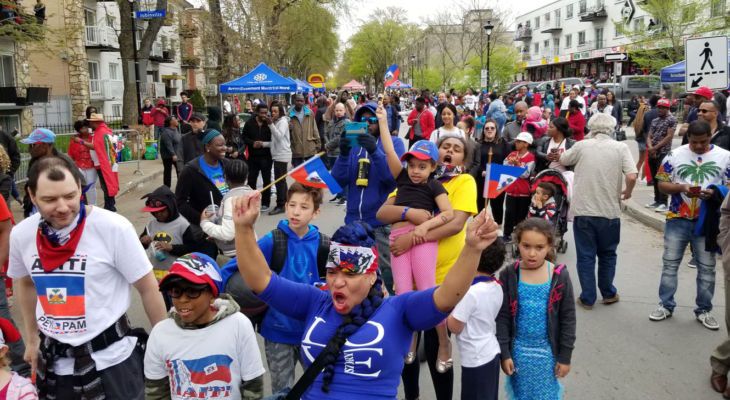
While the Haitian community has already suffered a notable setback on the federal scene, on the Island of Montreal, the 2025 municipal elections confirm a worrying trend: local political influence is crumbling, particularly in boroughs where its presence has been historic and decisive. Montréal-Nord, long considered an identity stronghold, now struggles to play that symbolic role.
A well-established community, but politically weakened
Present throughout Montreal's territory, the Haitian community is one of the most numerous, oldest, and best-integrated in Quebec. Its roots go back to the Quiet Revolution, a period during which it began to occupy a lasting place in the province's social, cultural, and economic fabric.
Today, a strong concentration of members of this community is found in the boroughs of Rivière-des-Prairies, Saint-Michel, and Montréal-Nord—the latter often considered a major identity symbol, intimately linked to Haitian history in Montreal.
Significant progress... until 2021
For over a decade, several people from the Haitian community have been elected within different municipal parties. Representation has become stable in Saint-Michel and Rivière-des-Prairies, while in Montréal-Nord, it remains more irregular.
The 2021 elections marked a historic moment: seven elected officials, a peak never before reached. Several observers attribute this breakthrough to the strategic work of Projet Montréal president Guedwig Bernier, who had focused on an inclusive vision and greater openness toward women and Montreal diversity.
On the Ensemble Montréal side, the dynamic is different. To find significant representation of Haitian elected officials in this party, one must go back to 2009, under Gérald Tremblay's administration, when two elected officials—Frantz Benjamin and Monica Ricourt—held key positions.
In 2013, Denis Coderre's arrival expanded representation to three elected officials, fostering real hope within the community. But this momentum would be short-lived.
2016: the turning point that weakens Montréal-Nord
The 2016 by-election in Montréal-Nord marks a tipping point. Several community members wanted to convince Ensemble Montréal to present a Haitian candidate for mayor. Their approach, considered legitimate but clumsy by some observers, was not adopted. The party instead chose Christine Black.
Two years later, Monica Ricourt, then the only elected official of Haitian origin on council, was replaced by Renée-Chantal Belinga, a candidate of African origin who would continue her mandate independently.
While this decision was welcomed by some community leaders, it also created discomfort among several local political actors, who called for representation more aligned with the demographic reality of Montréal-Nord, where the Haitian community constitutes one of the largest groups within the Black population.
A declining influence since 2016
The assessment is clear: since 2016, the political influence of the Haitian community in Montréal-Nord has been steadily declining.
• The only remaining Haitian elected official nearly was replaced by a candidate from another community.
• This replacement was only avoided thanks to the intervention of leaders and elected officials from the Haitian community.
• For the community's detractors, the cause is simple: Haitians don't vote, which mechanically reduces their political weight.
Meanwhile, associates of the mayor have multiplied meetings with various political and community actors. To what end? It remains to be determined whether these efforts have contributed, voluntarily or not, to the decline of Haitian representation at other levels. For several observers, these successive choices have weakened the trust of part of the community.
A threatened symbol: Montréal-Nord
Long perceived as a political and cultural stronghold, Montréal-Nord today risks losing this symbolic status. Without mobilization, without strategy, and without unity, the political representation of the Haitian community could continue to erode.
A call for vigilance and mobilization
In this context, Haitian community actors must redouble their efforts ahead of the next provincial elections.
The community has the history, demographic presence, and legitimacy to play a major role in Montreal political life. But this potential cannot be realized without:
• increased mobilization,
• a collective strategy,
• renewed leadership,
• and stronger citizen participation.
The 2025 elections mark not only an electoral setback: they reveal an urgent need for reflection and reorganization. Montréal-Nord could once again become a political driving force—but only if the community chooses to transform this setback into a starting point.