
T. Auguste: youngest voice at the 51st Parliamentary Assembly of the Francophonie
Roger Romulus ·
Tatiana Auguste stood out for the relevance of her contributions and her commitment to social issues, women's rights, and the situation in Haïti.
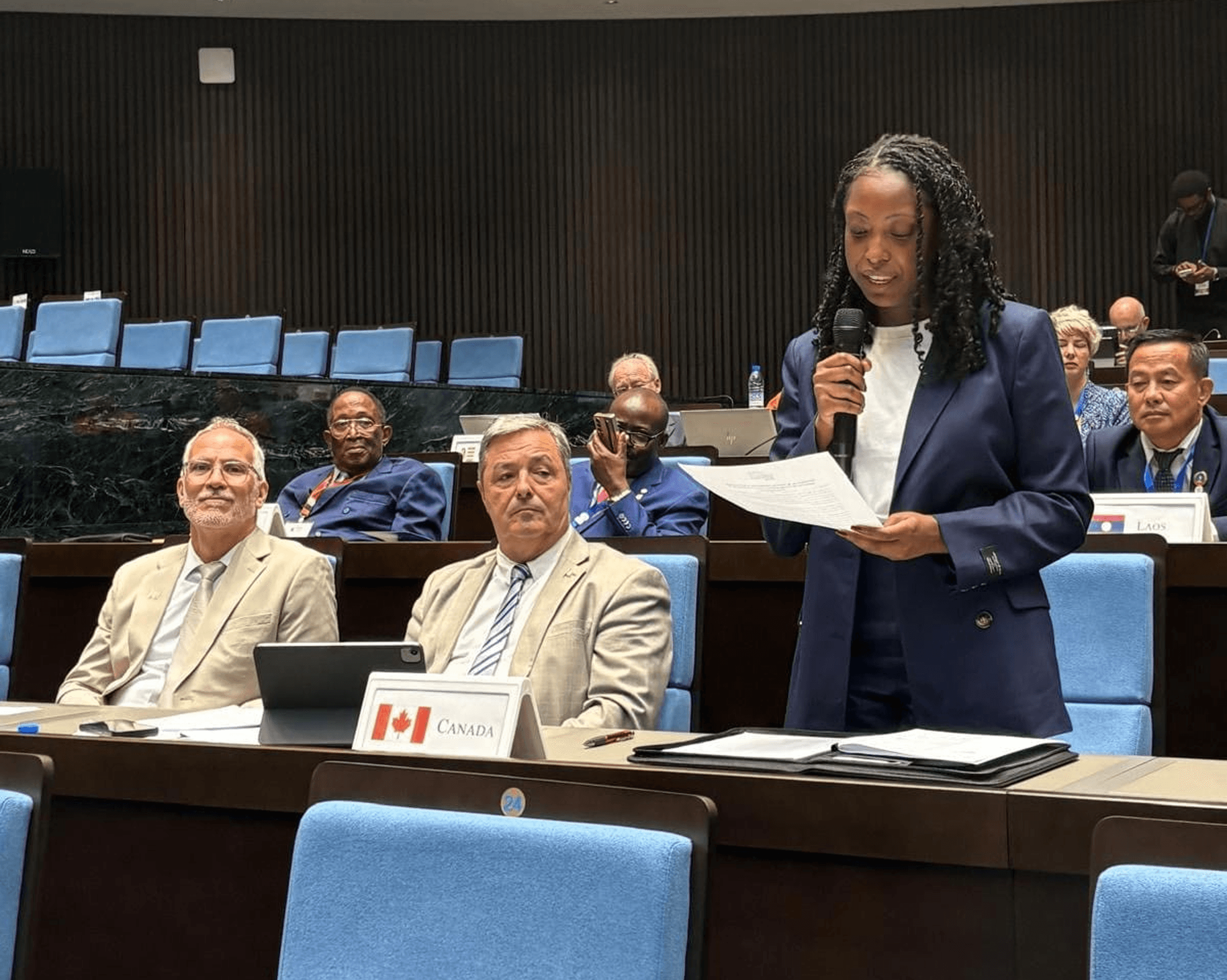
Among the youngest elected officials at the 51st Parliamentary Assembly of the Francophonie, held from July 7 to 12 in Yaoundé, Terrebonne Member of Parliament Tatiana Auguste distinguished herself through the relevance of her contributions and her commitment to social issues, women's rights, and the situation in Haiti.
Her participation, which drew attention in a space dominated by experienced parliamentarians, illustrates the generational renewal taking place within the Francophonie.
The Cameroonian capital hosted the 51st Parliamentary Assembly of the Francophonie (APF), an annual gathering bringing together members of parliament and senators from Francophonie member parliaments. Over several days, elected officials debated political, social, and economic issues affecting all French-speaking countries.
Among the participants, Canadian MP Tatiana Auguste stood out as the youngest parliamentarian at this edition, a notable presence in a space where experience has traditionally dominated discussions.
Amid seasoned parliamentarians, Tatiana Auguste made her mark through the clarity of her contributions and the relevance of her analyses. She took part in plenary sessions, thematic committees, and bilateral meetings, paying particular attention to human and social issues.
Her contributions were recognized on files related to women's rights, Francophone youth, and social justice. On the Haitian question, she advocated for a more coordinated, more humane, and more sustainable approach, emphasizing the importance of solutions rooted in ground-level realities.
She also noted that artificial intelligence is profoundly transforming the world and the Francophonie, and that it is essential to manage its impacts in order to strengthen governance, access to information, and citizen participation.
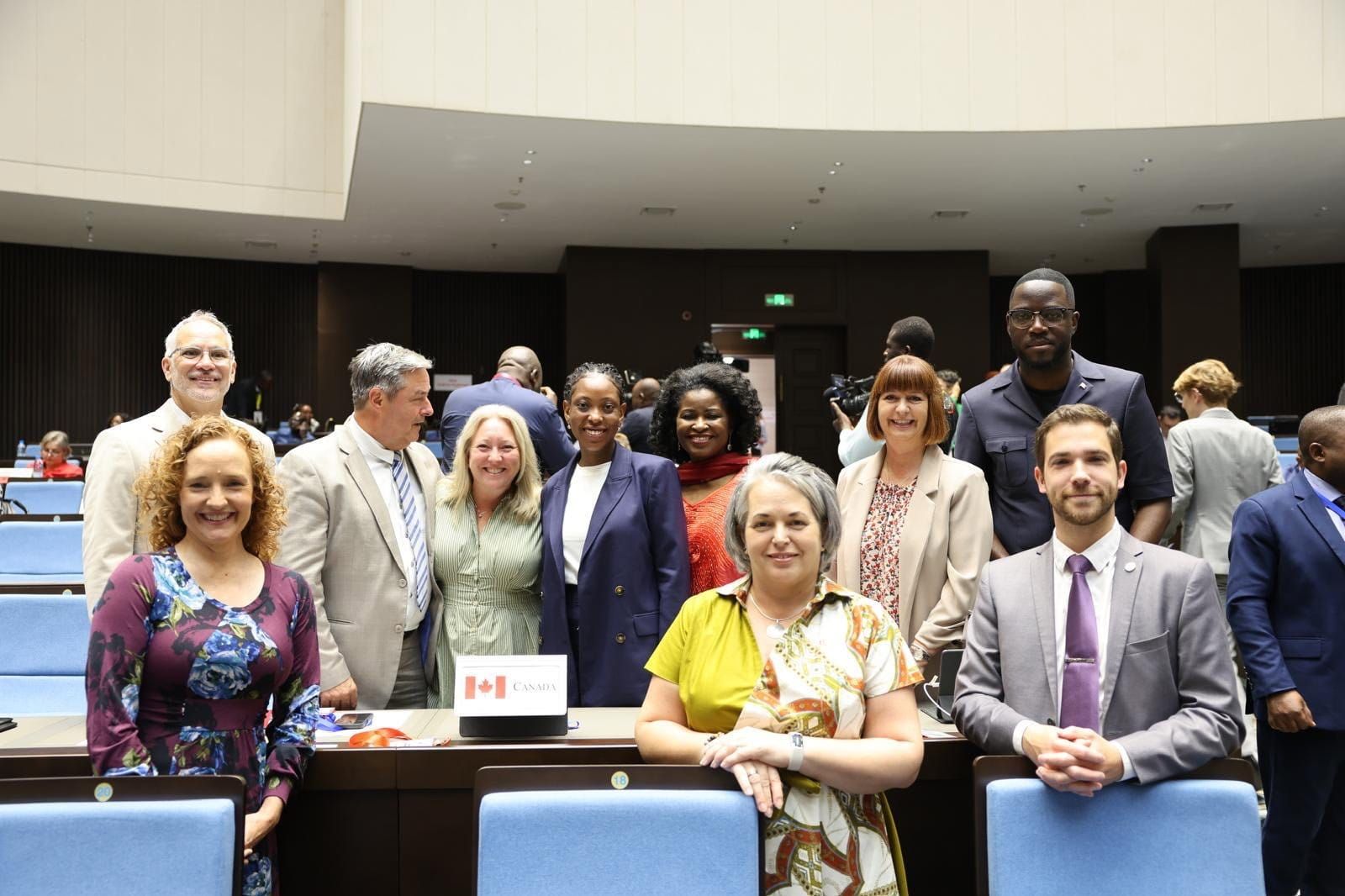
On the sidelines of the official sessions, the corridors of the Palais des Congrès in Yaoundé were the setting for numerous informal meetings. Tatiana Auguste engaged in many exchanges with African, European, and Caribbean elected women, forging connections that could strengthen cooperation between Francophone sections. Her youth, far from being a minor detail, proved to be an asset. She embodies a generation that wishes to modernize parliamentary practices, make the Francophonie more inclusive, and more attentive to contemporary social realities.
The Canadian MP's participation in this 51st edition of the APF confirms the rise of a new generation of elected women on the international stage. It illustrates a more open, more diverse, and more attuned parliamentary diplomacy, one more sensitive to human issues. For Canada, her presence in Yaoundé sends a powerful signal: that of a political new guard capable of advancing complex files, engaging with international partners, and contributing to the building of a modern Francophonie.
In a 51st edition marked by major political and social challenges, Tatiana Auguste successfully asserted her voice with confidence. In Yaoundé, she established herself as a parliamentarian to watch, one capable of combining commitment, attentiveness, and vision, and of upholding the values of the Francophonie.