
Montreal-Nord: zero funding for a high rate of domestic violence
Jean Numa Goudou ·
In 2025, there were 531 crimes against persons in the context of domestic violence.
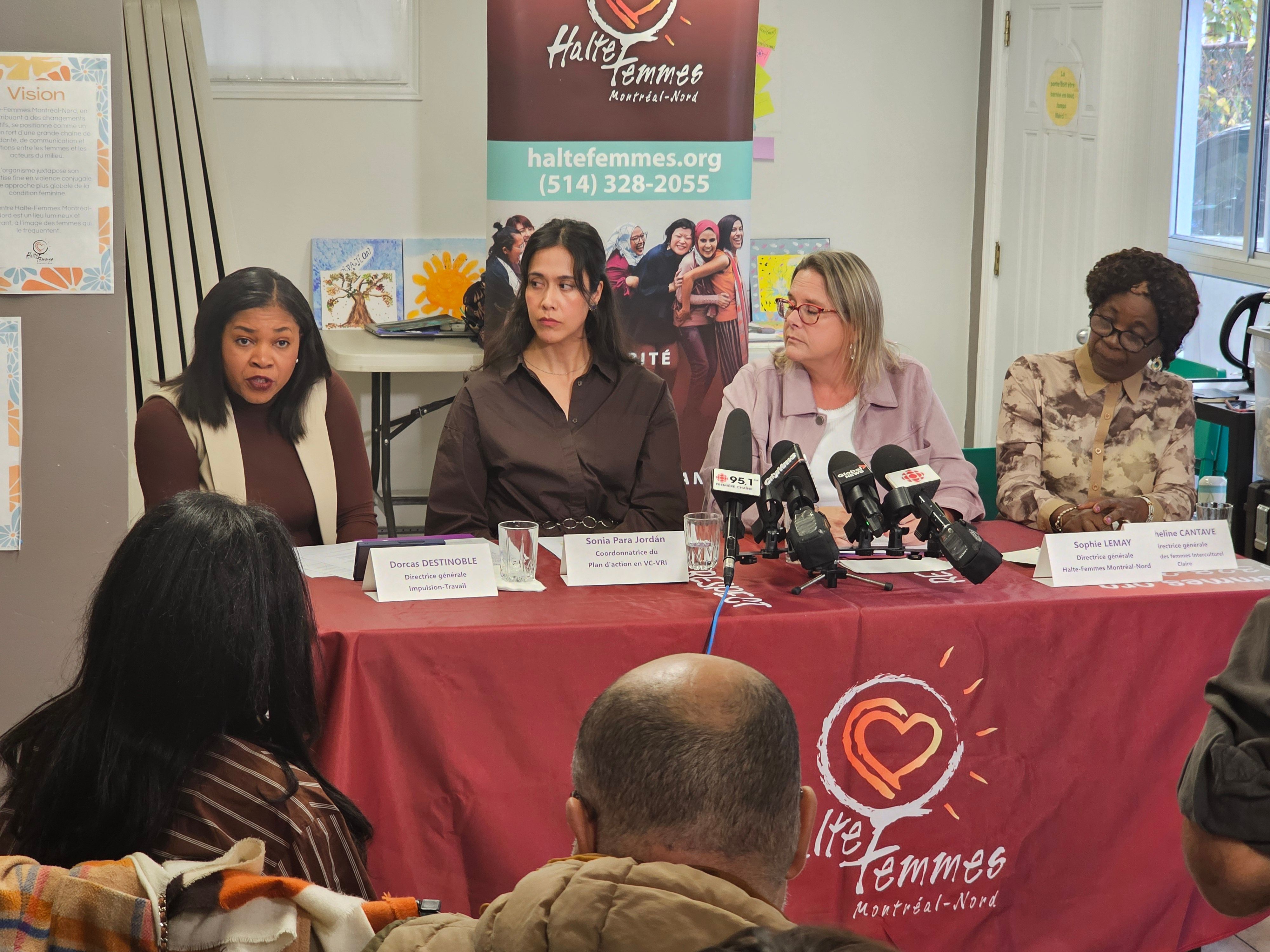
The Table Femmes osez au féminin (TFOF), of Montréal-Nord, is denouncing the absence of funding for domestic violence needs, even though the neighbourhood is the most affected by the phenomenon.
It is the botched intervention of a police officer working at PDQ-39 that lays bare the reality. The officer, currently under criminal investigation, allegedly erased evidence of the violence this woman suffered, as he is reportedly friends with the aggressor.
A portrait produced in 2019 by the TFOF revealed that the rate of domestic violence reported to police was nearly twice as high as in the rest of Montréal: 7.12 versus 3.75 per 1,000 women.
"Since then, the borough has never relinquished its top ranking for domestic violence among the 28 PDQs on Montréal's territory," the Table points out.
-
In 2025, there were 531 crimes against persons in the context of domestic violence.
-
These figures do not exclude break-and-enter incidents, which are very significant in domestic violence situations.
-
That is one and a half incidents per day, in Montréal-Nord alone.
"Montréal-Nord holds the unfortunate record for domestic violence in Montréal, yet receives zero dollars in dedicated funding. It is mathematically absurd. How do you justify the unjustifiable, especially knowing that there have been 15 femicides to date in 2026?" exclaims Halte-femmes director Sophie Lemay.
In total, four organizations that assist women are calling for a set of measures and meetings with authorities aimed at protecting victims and ensuring that their cases are handled rigorously.
The Table is calling for the mechanisms used to process cases and complaints to be examined with rigour, for concerning situations to be taken seriously, and for victims to have access to confidential, safe, and needs-adapted support.
They also want a meeting with the highest authorities to build a coordinated response. A meeting with the commanders of PDQ-39 is planned.
"The Table is demanding, however, that Montréal's mayor and the director of the Service de police de la Ville de Montréal participate, along with the relevant public health partners," says Sonia Parra Jordan, coordinator of the action plan on domestic violence and intimate partner violence among youth, at the press conference.
"We believe it is essential to meet with the Minister of Public Safety, the Minister responsible for the Status of Women, and the Minister responsible for Mental Health and Social Services," she adds.
Finally, the TFOF is demanding funding commensurate with the seriousness of the issue, in order to support organizations, strengthen services, develop prevention, and ensure a true continuum of services.
"We take note of our elected officials' statements and the concerns expressed following the PDQ-39 affair. But words do not protect women. What is needed are firm commitments, resources equal to the need, and concrete action," the coalition of organizations observes.
The TFOF says it does not have statistical data on which segment of Montréal-Nord's population (comprising approximately 80 ethnicities) is most affected by this violence. According to Sophie Lemay of Halte-femmes, "domestic violence affects all cultures" and "has no social status, no level of education, no skin colour."
"In our statistics, we do not look at who is most affected based on immigration status. It really is women in general: 78% of victims are women. The statistics we cited are not broken down by immigration status," she clarifies.
Question from In Texto
You say there is a great deal of violence but no funding to help you work in this area. How do you manage to help these women?
Sophie Lemay: "The government does provide money for domestic violence, but the funds go to shelters, second-stage housing, resources for men, coordinated action units — and that is all well and good. Except that there are all the organizations that receive women who do not want to go to a shelter for all kinds of reasons, or who do not feel they are in danger. Because there are femicides where the woman did not feel she was in danger: 'No, he won't do anything to me, he's never hit me.' We hear that, but the first physical act could be killing her. So how do we manage? Halte-Femmes was founded precisely to respond to that need. We do what we can, but we save lives. We assess the situation with the woman, we prioritize. But all the work we do around violence is not recognized by the government."
In Texto: Do you mean that upstream work is not funded?
Sophie Lemay: Before, during, and after. We have women who come to us without knowing they are living with violence. We have women in crisis situations. And we have women who have been in shelters, who come to settle in the neighbourhood and who need to rebuild themselves — rebuild their self-esteem, their identity. These are activities we do with them in women's centres and in other community organizations. And none of that work is recognized by the government.