
I am officially launching the organization Impact Collectif Canada (ICC)
Oméga Jules ·
The ambition of this organization is not to add an additional polarizing voice to an already saturated public space.
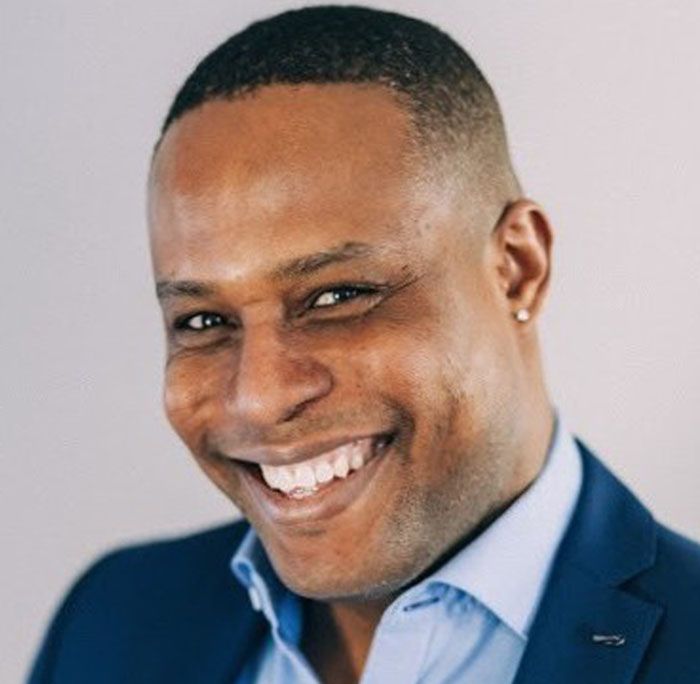
It will soon be twenty years since I immigrated to Québec with my family. Trained as an economist, with a banking audit career already well underway and, above all, a certain desire to build a new life fully integrated into my host society.
I believed then that successfully integrating would depend essentially on employment and perseverance, beyond the language I already spoke fluently. Experience has taught me above all that we greatly neglect an additional parameter that is nonetheless essential to true inclusion, particularly for citizens from ethnocultural communities.
Listening on the ground to better understand
Over the years, I have had the privilege of working within Québec's public administration and financial institutions, while also becoming involved in my community. More recently, my engagement at the heart of Montréal-Nord led me to launch several citizen initiatives, including a Virtual Exchange Group and the Initiative Dialogues Citoyens.
For months, I took the time above all to listen in order to better understand. On one hand, I met many citizens who sincerely want to contribute to society, yet who prove to be surprisingly ill-equipped and far removed from decision-making spaces. I encountered parents who are unaware of the administrative structures influencing their daily lives, and promising young people seeking a way to get involved, without genuine support.
All of this, knowing that on the other side, several institutions wishing to better reach these populations still struggle to find the appropriate channels to build genuine bonds of trust with these communities.
Such a gap cannot be explained solely by institutional rigidity, a lack of citizen willingness, or an absence of talent. It reveals above all invisible barriers, on both sides, that we must urgently remove as a society in order to foster the full participation of all.
The missing piece in inclusion
In hindsight, a first conviction has become clear to me: no one can fully participate in a collective whole whose workings they do not sufficiently understand. The public debate has indeed focused for decades on economic and linguistic integration and the fight against discrimination. These dimensions remain fundamental, but they nonetheless obscure a vital parameter: civic integration.
Obviously, institutions have a responsibility to be accessible, transparent, representative, and trustworthy. This is a non-negotiable democratic prerequisite. But for this openness to produce its full effects, citizens must also possess the necessary keys. In a truly inclusive society, the dignified and complete integration of citizens also requires that everyone, regardless of background, develop a genuine civic culture enabling them to sufficiently understand the rules of the democratic game in order to participate in it with ease.
This is a concern that is increasingly present in Québec's public debate. Yet one question remains unanswered: how do we concretely guide citizens toward full participation in society?
Moving beyond the logic of confrontation
Through my various commitments, a second conviction has become clear to me: building an inclusive society requires us, collectively, to move away from the stance that systematically pits institutions against communities.
Certainly, injustice and discrimination must be firmly denounced. However, lasting inclusion requires building stable bridges and helping citizens decode structures in order to participate fully within them and contribute to their evolution from the inside.
In my view, true inclusion consists as much in bringing institutions closer to citizens as in bringing citizens closer to institutions. This is precisely where civic education and the capacity to act take on their full meaning.
Leading by example
These deep convictions, forged through my personal experience and contact with the field, have led me to take a further step in my involvement: on July 25th, I will officially launch the organization Impact Collectif Canada (ICC).
The ambition of this organization is not to add yet another polarizing voice to an already saturated public space. This non-profit will instead seek to draw on civic education, awareness-raising, dialogue, and capacity-building to stimulate citizen engagement and reduce the institutional gap with regard to ethnocultural communities.
Because ultimately, a strong and equitable democracy does not rest solely on the quality of its laws or institutions. It rests above all on the ability of all segments of its population to understand their environment, to participate fully within it, and to shape its evolution for the benefit of the common good.
Omega Jules, Adm.A, M.Fisc, MBA President and Founder Impact Collectif Canada www.impactcollectif.ca