
Haiti ranks 16th in traveler reception but its passport 165th
Passeport Reports ·
According to Passport Reports, a platform that publishes passport reports for 199 countries in 34 languages, the country ranks 18th worldwide among the most welcoming destinations, while its passport ranks 165th globally.
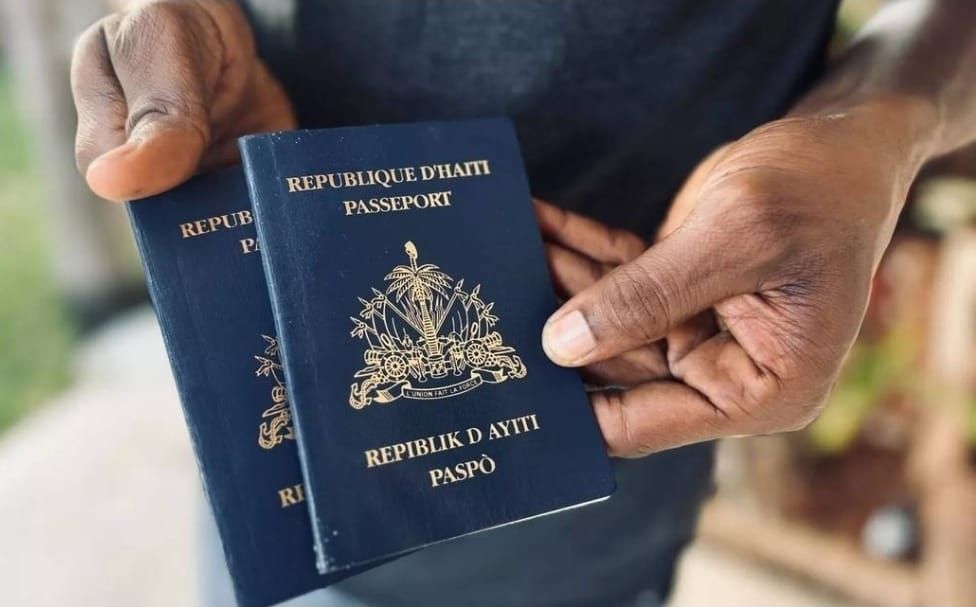
Haiti presents a marked contrast between its policy of welcoming foreign visitors and the international travel opportunities available to its own citizens.
According to Passport Reports, a platform that publishes passport reports for 199 countries in 34 languages, the country ranks 18th worldwide among the most welcoming destinations, while its passport ranks 165th globally.
Passport ranking data, updated on November 1, 2026 and verified on November 10, assigns the Haitian travel document a mobility score of 41, corresponding to visa-free or simplified entry access to 20.7% of the destinations studied.
Haiti allows visa-free entry to nationals of 193 countries
Data on entry conditions into Haiti presents a situation noticeably different from that encountered by Haitian travelers abroad. Of the 198 foreign passports examined, holders of 193 can enter Haiti without a prior visa, while five nationalities remain subject to this requirement.
These welcoming conditions place Haiti 18th worldwide in the ranking of most welcoming countries established by Passport Reports. The recorded regulations generally provide for a short-term stay of up to 90 days for visa-exempt visitors.
Travelers arriving by air are also subject to a tourist or entry fee of 10 US dollars, according to information published in the report on entry requirements.
This openness to foreign visitors does not, however, mean that Haitian citizens enjoy equivalent benefits abroad. For example, holders of a French passport can make a visa-free stay in Haiti under the indicated conditions, while Haitian nationals must obtain a visa before traveling to France.
A mobility score of 41 for Haitian travelers
The international ranking by Passport Reports indicates that Haitian citizens have access to 41 destinations without a traditional prior visa or through simplified entry procedures.
This mobility is distributed among 12 visa-free destinations, 23 destinations offering a visa on arrival or equivalent arrangements, and 6 destinations falling under the category of electronic travel authorizations (eTA). The remaining 157 destinations require a visa or other authorization classified in the prior visa category.
The proportion of destinations accessible without a visa or through simplified procedures thus reaches 20.7%, calculated based on the 198 foreign destinations taken into account.
Among the countries accessible without a visa are Angola, Benin, Grenada, the Philippines, and Rwanda. Malaysia and Singapore also appear in this category, with an arrival card and an indicated stay of 30 days.
Electronic authorizations or equivalent procedures apply notably to Kenya, Israel, South Korea, Côte d'Ivoire, Seychelles, and Sri Lanka. For Seychelles, the report mentions a tourist registration that may be associated with a 90-day stay.
Visa-on-arrival options include notably Cambodia, Madagascar, the Maldives, Nepal, Tanzania, and Zambia. Some of these destinations also offer an electronic visa procedure, which may allow travelers to complete certain steps before departure.
Last place in North America and the Caribbean
The position of the Haitian passport also appears in the continental and regional rankings published by Passport Reports. At the North American level, which includes in this classification the countries of Central America and the Caribbean, Haiti ranks 23rd out of 23 countries.
In the ranking specific to the Caribbean region, the country sits at 16th out of 16. This comparison highlights a mobility gap with several other Caribbean passports, notably those of Barbados, the Bahamas, Saint Kitts and Nevis, and Grenada, which occupy higher positions in the regional ranking.
The Caribbean ranking should not be confused with that of the Caribbean Community, whose scope of comparison is different.
Haiti's positions within international organizations
Passport Reports' thematic rankings also allow for comparison of passports within groupings of countries defined by their membership in international organizations or by common characteristics.
Within the Caribbean Community (CARICOM), Haiti ranks 14th out of 14 countries. In the Community of Latin American and Caribbean States (CELAC), the Haitian passport comes in 33rd out of 33.
Among World Trade Organization (WTO) members included in the index, Haiti ranks 152nd out of 159. In the Group of 77 (G77), the country sits at 114th out of 132.
The linguistic ranking dedicated to countries with French among their official languages places the Haitian passport 29th out of 29.
These positions constitute separate comparisons from the overall global ranking. They measure passport mobility within each group and do not represent an assessment of the political or economic importance of the organizations concerned.
Travel to Europe: a visa remains required for Schengen destinations
The entry conditions listed in the Passport Reports report indicate that Haitian citizens must obtain a visa before traveling to the 29 countries of the Schengen Area.
This requirement applies notably to France, Germany, Spain, Italy, Belgium, the Netherlands, and Switzerland, as well as the other members of this free-movement area.
A simulation based on Passport Reports' ranking rules allows for measuring the theoretical effect of a visa exemption for these destinations.
In the scenario where the 29 Schengen destinations currently requiring a prior visa were to become accessible visa-free to Haitian passport holders, the mobility score would increase from 41 to 70. The number of visa-free destinations would rise from 12 to 41, while the electronic authorization and visa-on-arrival categories would remain at 6 and 23 respectively.
Keeping the data of other passports unchanged, this modification would hypothetically place Haiti at 101st worldwide, compared to the currently observed 165th position. In the reference ranking, Indonesia occupies 100th place with 74 points and Botswana 101st with 69 points, which allows the simulated score of 70 to be situated between these two positions.
This result constitutes exclusively a conditional projection. It does not correspond to any announced modification of visa rules and does not mean that an exemption would currently be available.
A shift in ranking between 2025 and 2026
Historical data published by Passport Reports also shows an evolution in the position of the Haitian travel document. In 2025, the passport ranked 149th worldwide, with a mobility score of 61. In 2026, the updated data indicates a 165th place, accompanied by a score of 41.
These figures correspond to a drop of 20 mobility points and a decline of 16 positions in the published annual rankings. They describe the evolution observed in the index, without in themselves establishing the precise causes of changes in entry conditions or their classification.
Regular updates thus allow for tracking changes affecting travel opportunities and the relative standing of different passports.
A common method for comparing passports
The differences observed between international passport rankings may stem from the methods used to classify travel requirements, assign scores, and break ties.
Passport Reports applies predefined and measurable criteria to all passports, with a publicly disclosed comparison order. Its mobility score corresponds to the sum of destinations accessible without a visa, with a visa on arrival or a facilitated procedure falling under that category, and with an electronic travel authorization.
The ranking prioritizes first the total mobility score. In the event of a tie, it successively compares the number of visa-free destinations, the number of destinations accessible with an electronic travel authorization, and then the number of destinations offering a visa on arrival or an equivalent procedure.
When these four values are identical, passports share the same rank. This method aims to ensure a consistent, fair, and transparent comparison, while distinguishing between different forms of international access.
Source: Passport Reports