
Child Protection Services would like to detect racism in reports
Jean Numa Goudou ·
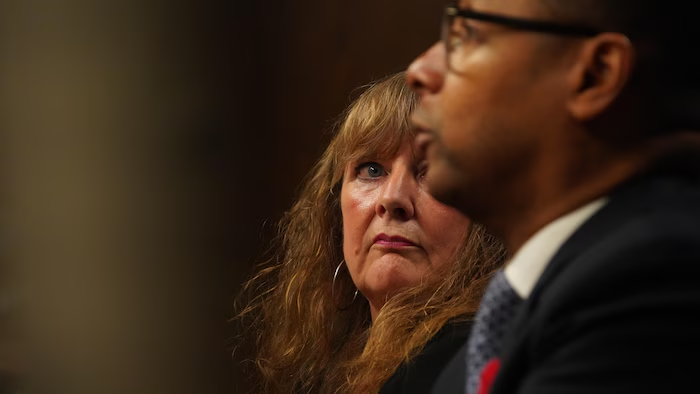
"We need to improve on these issues. One aspect is to go see what's being done elsewhere. In Ontario they have a cutting-edge anti-racist strategy, we need to go see what's being done elsewhere" - Lesley Hill
The Direction de la protection de la jeunesse (DPJ) is working on an anti-racist component as part of its new "Growing in Confidence" Strategy, a plan modeled on the Laurent report that should unfold over three years (2026-2029).
This component should be based on models being developed elsewhere, such as in Ontario or in Montreal with the SPVM. In this police force, officers assigned to 911 calls are trained to detect in advance phone calls considered racist coming from the population. When questioned on the subject in an interview granted to In Texto, DPJ national director Lesley Hill did not rule out this option.
"We need to improve on these issues. One of the components is to go see what's being done elsewhere. In Ontario, they have a cutting-edge anti-racist strategy, we need to go see what's being done elsewhere."
Schools, a reporting machine
In this province, authorities detect, upstream, racist reports that come notably from the school system. "The majority of reports come from the school environment, that's clear, clear," says Lesley Hill, "but the rest of the children's trajectory is less clear."
The DPJ national director emphasizes that the authorities' new Strategy represents a shift toward more preventive approaches, a transformation, because "we know there are populations that are overrepresented, notably the Black community" in the system.
"We need to put emphasis on how we're going to support these families to give them something other than DPJ care," pleads Ms. Hill.
And for this, youth protection intends to encourage better access to frontline services and service adaptation, intercultural training for people who intervene with families in order to better "understand that sometimes we're dealing with cultural differences and not patterns of mistreatment."
But reducing the representation of Black communities at the DPJ must go through a new approach based on the work of organizations found there. Lesley Hill cites as an example the Option protection program of BCHM in this regard. More than 2000 children have avoided going to the DPJ thanks to this initiative over recent years.
"Honestly, we can't reduce reports if we don't have other service models for people. The problem is that we can't manage to help people other than through reporting," deplores the youth official.
Reporting and poverty
However, the Implementation Plan of the new Strategy provides for a specific project for cultural diversity training and service adaptation. Someone has just been hired for this at the Ministry of Health.
"We have a strong representation of Black communities in connection with physical abuse. We know we have very little tolerance in Quebec regarding this. There are parents who tell us: but how am I going to raise my child, you're taking away my parental authority," observes the DPJ national director.
Authorities are seeking to understand and avoid having "people with difficult living conditions" have a high probability of being reported to the DPJ.
"There's something linked to living conditions and poverty. Research shows it: children from poor neighborhoods are reported more often than those who live in more affluent neighborhoods," emphasizes Ms. Hill.
A former social worker who became a DPJ leader, Lesley Hill says she observes that "the social fabric has deteriorated. We had more community solidarity."
"Yes and no"
She remembers that in schools, for example, there were surplus lunches, clothes, boots and shoes for children who didn't have them, which is done less nowadays.
When asked if youth protection has improved since the Laurent report: "Prevent rather than cure" in May 2021, Lesley Hill responds: "yes and no."
"The DPJ works better with community organizations" to say "yes" to the question. "But we need to improve on two levels: having the data and secondly, having a specific strategy to reduce the overrepresentation of Black children," she says.
Note that 9% of reports are taken into care in Quebec.