
A 27th Week of Action Against Racism
Jean Numa Goudou ·
During the period from March 20 to 31, a series of awareness, reflection and exchange activities on the importance of intercultural connections and contacts and the democratic values of our society.

After Black History Month (in February), March welcomes, from the 20th to the 31st, a Week of Action Against Racism and for Equal Opportunities for the 27th year. And for 15 years, it has been historian Frantz Voltaire, of Haitian origin, who coordinates its 70 activities in 2026.
These are primarily awareness actions with "an educational approach." The Centre for Research-Action on Race Relations (CRARR) adopts a legal angle.
"We are complementary," emphasizes Frantz Voltaire in an interview with In Texto, who speaks of this issue as an endless battle. "There are no miracles in the fight against racism," he says, "it's a long-term effort."
The Week of Action Against Racism (SACR) was created in 1999 to celebrate the International Day for the Elimination of Racial Discrimination, which was proclaimed by the United Nations General Assembly in 1966.
An endless battle
"There have been advances just as there have been setbacks," notes the historian, "the discourse we're witnessing in Europe shows us that we're in a regression. We'll need to close ranks and form alliances."
He invites us to look at what's happening in the United States and in certain parts of the world where the far right is rising. Frantz Voltaire deplores, for example, the discourse of Zemmour, in France, who speaks of "re-migration."
The French politician, Éric Zemmour of Algerian origin, promises to send all migrants back to their home countries if he is elected to power.
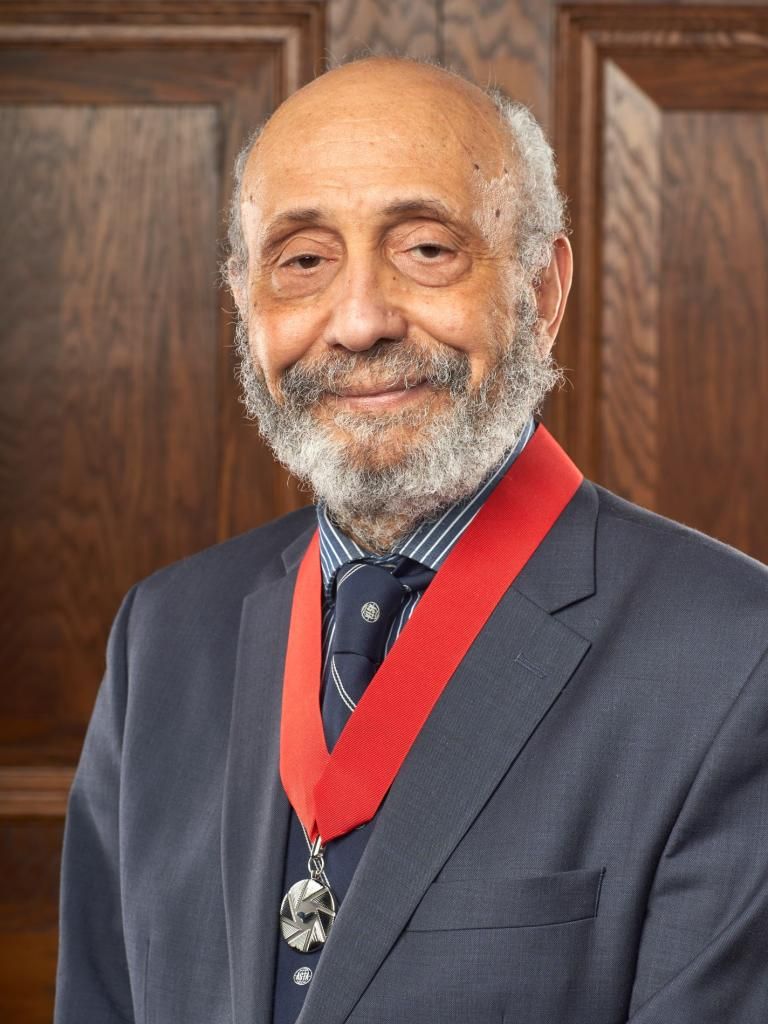 Historian Frantz Voltaire
"We know we're in a phase that will be very difficult for the coming years, with forms of discrimination. There are systemic forms and there's a re-emergence of discourse. In times of crisis, we'll see them reappear without filters," warns the SACR coordinator.
However, Frantz Voltaire believes there have been advances in the fight nonetheless in the sense that "there are recognitions that didn't exist before." "It's a battle we must continue," he insists, "because 50 years ago, it was impossible to have political representatives. No Black person would have become a minister."
An immigrant of Haitian origin, Mr. Voltaire says he "saw the first Black police officer in Montreal (Anglade) in 1974 out of 4,000 officers." "He faced difficulties. Today there are several hundred," he rejoices. "Big and small advances, but it's always a battle."
The activities
During the period from March 20th to 31st, a series of awareness, reflection and exchange activities on the importance of intercultural rapprochement and contacts and the democratic values of our society.
Mandated by the Government of Quebec to coordinate the activities, the Centre international de documentation et d'information haïtienne, caribéenne et afro-canadienne (CIDIHCA) proposes different events for the occasion.
• Prevent and combat exclusion based notably on skin color, ethnic or national origin; • Foster an informed public dialogue about racism and cultural diversity in Quebec; • Carry out activities that favor rapprochement between Quebecers of all origins, in order to prevent tensions or facilitate their resolution; • Generate interest from the general public, particularly young people, on issues related to these problems; • Establish partnerships with cities and organizations in all regions of Quebec to implement educational activities.
Here is a brief history of SACR:
a. At Concordia, Black students rise up against the racist remarks of a professor (1968). b. CIDIHCA organizes a symposium on Black writers at UdeM: "Racism and Society" (1984). c. Images interculturelles develops a Week of Action Against Racism (1999). d. In 1999, SACR is institutionalized to mark March 21st, International Day for the Elimination of Racial Discrimination established by the United Nations (CIDIHCA - André Jacob - CRIEC). e. CIDIHCA mandates C.O.R. for the coordination of SACR (2017 to 2023).